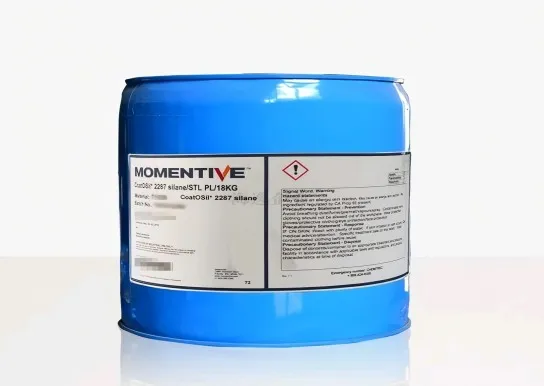
Features Of Momentive E-FREE189 Silane Coupling Agent
Emission Reduction - Virtually eliminates ethanol emissions (>97%) during manufacturing
Performance Efficiency - Achieves target properties at reduced dosage (1-3 wt%)
Dynamic Properties - Enhances modulus (up to 30%) and abrasion resistance in rubber
Process Optimization - Lowers viscosity and prevents premature scorching
Multi-Matrix Compatibility - Works with EPDM, SSBR, polyesters, and epoxies
Typical Applications Of Momentive E-FREE189 Silane Coupling Agent
Green Tires - Silica-reinforced treads for fuel-efficient vehicles
Industrial Rubber - Seals, hoses, and belts with extended service life
Anti-Corrosion Coatings - Improved filler dispersion for metal protection
Structural Composites - Glass fiber/polyester reinforcement for FRP
Specifications Of Momentive E-FREE189 Silane Coupling Agent
Chemical Name | Mercapto Silane |
Appearance | Colorless to light yellow transparent liquid |
Molecular Weight | 248.4 |
Specific Gravity (25/25℃) | 1.033 |
Boiling Point (760mmHg) | 255℃ |
Flash Point (Sealed Cup) | 108℃ |
Solubility | Soluble in methanol, ethanol, acetone, etc., and hydrolyzed in pH=4 water |
Packaging | 25KG/drum |
Momentive E-FREE189 Silane Coupling Agent – Frequently Asked Questions (FAQ)
Q1: What is the primary functional chemistry of E-FREE189?
A: E-FREE189 is a non-halogenated, amino-functional silane coupling agent designed to enhance interfacial adhesion between inorganic substrates (e.g., glass, minerals, metals) and organic polymers, particularly in thermoset resins and elastomers.
Q2: How does E-FREE189 differ from traditional chlorosilane-based coupling agents?
A: Unlike chlorosilanes, E-FREE189 contains no reactive chlorine atoms, eliminating concerns related to HCl generation during processing—making it safer for equipment, more stable in storage, and suitable for moisture-sensitive formulations.
Q3: In which types of polymer systems is E-FREE189 most commonly applied?
A: It is widely used in epoxy, phenolic, polyurethane, and silicone-based systems—especially where improved filler dispersion, wet adhesion, or long-term durability under humid or thermal stress is required.
Q4: What is the typical dosage range for E-FREE189 in filled composite formulations?
A: Dosage is formulation-dependent, but it is generally used at low concentrations—typically ranging from 0.1% to 2% by weight relative to the inorganic filler—and optimized based on substrate surface area and desired performance balance.
 English
 Español
 tiếng việt
 русский