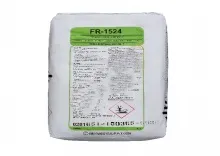
Features Of TEIJIN FG-7500 Phosphorus-Based Flame Retardants
Thermal Resilience - Maintains stability at processing temperatures up to 290°C
Material Preservation - Minimal impact on impact strength and flexural modulus
Eco-Advanced Formula - Halogen-free and low smoke emission
Processing Versatility - Compatible with injection molding and extrusion
Synergistic Efficiency - Enhanced performance with mineral fillers
Typical Applications Of TEIJIN FG-7500 Phosphorus-Based Flame Retardants
Automotive Electronics - EV battery components and sensors
Electrical Engineering - High-voltage connectors and switches
Industrial Components - High-temperature mechanical parts
Consumer Electronics - Thin-wall device housings
Transportation - Aircraft interior components
Specifications Of TEIJIN FG-7500 Phosphorus-Based Flame Retardants
| Chemical Type | Organic phosphorus derivative |
| Phosphorus Content | 20-24% |
| Decomposition Point | 295°C |
| Particle Size D90 | <30μm |
| Density | 1.45-1.55 g/cm³ |
| Recommended Loading | 12-28% |
TEIJIN FG-7500 Phosphorus-Based Flame Retardants – Frequently Asked Questions (FAQ)
Q1: What types of polymers is TEIJIN FG-7500 compatible with?
A: TEIJIN FG-7500 is primarily designed for use in engineering thermoplastics such as polyamide (PA6, PA66), polybutylene terephthalate (PBT), and polycarbonate (PC) blends. It demonstrates good compatibility and dispersion in these matrices without significant impact on mechanical properties or melt processability.
Q2: How does FG-7500 achieve flame retardancy without halogen compounds?
A: FG-7500 operates through a condensed-phase mechanism—promoting char formation on the polymer surface during thermal decomposition. This phosphorus-based action creates a protective barrier that insulates the underlying material and reduces fuel supply to the flame, meeting halogen-free flame retardancy requirements for many electronics and automotive applications.
Q3: Does FG-7500 affect the electrical insulation properties of finished parts?
A: No—FG-7500 is formulated to maintain high volume resistivity and dielectric strength in flame-retarded compounds. It is widely used in components requiring reliable electrical performance, including connectors and housings for consumer electronics and industrial control systems.
Q4: Is FG-7500 suitable for injection molding and extrusion processes?
A: Yes—FG-7500 exhibits excellent thermal stability up to typical processing temperatures for engineering plastics and shows minimal volatility or degradation during standard injection molding and extrusion. Its low dusting characteristics also support consistent feeding and handling in automated production lines.
 English
 Español
 tiếng việt
 русский