English
 Español
 tiếng việt
 русский
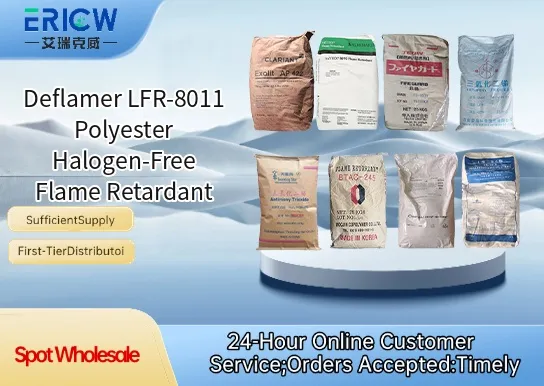
Phosphorus-nitrogen synergistic intumescent system delivering excellent flame retardancy without halogenated compounds.
High thermal stability suitable for polyester melt processing up to 280 °C.
Low migration and excellent compatibility with polyethylene terephthalate (PET) and polybutylene terephthalate (PBT).
Meets UL 94 V-0 rating at 1.6 mm thickness in reinforced polyester formulations.
Reduces smoke density and toxic gas emission during combustion, supporting improved fire safety compliance.
Electrical and electronic components requiring RoHS-compliant flame retardancy (e.g., connectors, housings, insulators).
Automotive interior parts including seat frames, trim panels, and under-hood components.
Fiber and textile applications for flame-retardant PET spunbond nonwovens and staple fibers.
3D printing filaments based on flame-retardant PET/PBT blends.
Industrial conveyor belts and technical textiles demanding low-smoke, halogen-free performance.
| Chemical Type | Phosphorus-nitrogen intumescent flame retardant |
| Product Form | Free-flowing white granules |
| Appearance | Off-white to light beige granules |
| Primary Applications | PET, PBT, and copolyester thermoplastics |
| Key Features | Halogen-free, RoHS/REACH compliant, UL 94 V-0 capable |
| Recommended Loading Level | 15–22 wt% depending on polymer matrix and performance requirements |
| Decomposition Onset Temperature (TGA, N₂) | ≥270 °C |
| Density | 1.35–1.42 g/cm³ |
Q1: What types of polyester resins is Deflamer LFR-8011 compatible with?
A: Deflamer LFR-8011 is specifically engineered for use in unsaturated polyester (UP) resins and modified polyester systems, including those used in sheet molding compounds (SMC), bulk molding compounds (BMC), and gel coats. It demonstrates good compatibility and dispersion stability without significant impact on resin viscosity or pot life.
Q2: How does LFR-8011 achieve flame retardancy without halogens?
A: LFR-8011 operates primarily through an intumescent mechanism—promoting the formation of a thermally stable, carbon-rich char layer upon exposure to heat. This char acts as a physical barrier that insulates the underlying material, reduces fuel release, and limits oxygen diffusion, thereby suppressing flame propagation in compliance with halogen-free design principles.
Q3: Does LFR-8011 affect mechanical properties or surface finish of cured composites?
A: When incorporated at recommended dosage levels, LFR-8011 generally maintains good retention of tensile strength, flexural modulus, and impact resistance. It also supports acceptable surface aesthetics in molded parts, though optimal results depend on thorough dispersion and compatibility testing within the specific resin formulation and processing conditions.
Q4: Is LFR-8011 suitable for applications requiring low smoke and low toxicity during combustion?
A: Yes—being halogen-free and phosphorus-based, LFR-8011 contributes to significantly reduced smoke density and lower generation of corrosive or toxic gases compared to brominated or chlorinated alternatives, supporting compliance with stringent fire safety requirements for transportation and building interiors.
Contact With Us:
E-mail: wangxingqiang@ericwchem.com
Have a Questions? Call Us:
Add:
Building A1, Jiete Industrial Park, Huangpu District, Guangzhou City, Guangdong Province, China