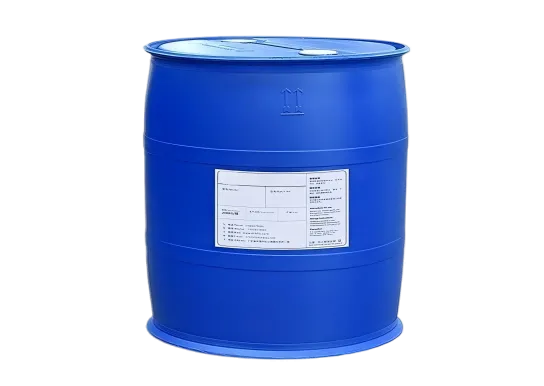
Features Of Clariant Dispersogen 1728 Anionic Polymer Dispersants
Pigment Optimization - Improves organic pigment and carbon black dispersion
Process Efficiency - Reduces viscosity for better flow
Temperature Stability - Performs across wide temperature ranges
Low Foaming - Minimizes foam in final products
Eco-Friendly - Low VOC and global regulatory compliance
Typical Applications Of Clariant Dispersogen 1728 Anionic Polymer Dispersants
Water-Based Coatings - Enhances color paste stability
Printing Inks - Improves color vibrancy
Industrial Paints - Boosts coating performance
Tinting Systems - Ideal for in-plant color concentrates
Specifications Of Clariant Dispersogen 1728 Anionic Polymer Dispersants
Chemical Name | Water-soluble Novolac Derivative |
Appearance | Yellow Viscous or Paste-like Liquid |
Brand | Clariant |
Model | Dispersogen 1728 |
Active Content | Approx. 35% |
Ionic Character | Anionic |
pH (1% in Water) | 6-8 |
Density | Approx. 1.1 g/cm³ |
Flash Point | >100℃ |
Viscosity | Approx. 4000 mPa·s |
Packaging | 25 kg/drum |
Origin | Germany |
Clariant Dispersogen 1728 Anionic Polymer Dispersants – Frequently Asked Questions (FAQ)
Q1: What types of pigments and fillers is Dispersogen 1728 especially effective for?
A: Dispersogen 1728 is particularly effective for stabilizing inorganic pigments (e.g., titanium dioxide, iron oxides) and mineral fillers (e.g., calcium carbonate, talc, silica) in aqueous systems. Its anionic polymeric structure provides strong adsorption and steric–electrostatic stabilization, helping to prevent agglomeration and sedimentation during storage and processing.
Q2: Is Dispersogen 1728 compatible with other additives commonly used in waterborne coatings or inks?
A: Yes — Dispersogen 1728 generally exhibits good compatibility with common co-additives such as rheology modifiers (e.g., associative thickeners), defoamers, and biocides in neutral to mildly alkaline formulations. However, compatibility should always be verified experimentally, especially when used alongside highly cationic species or strong electrolytes that may compromise colloidal stability.
Q3: How should Dispersogen 1728 be incorporated into a formulation for optimal dispersion performance?
A: For best results, Dispersogen 1728 is typically added during the pigment wetting stage — either pre-diluted in water or directly to the millbase prior to high-shear dispersion. It is recommended to add the dispersant before or concurrently with the pigment to ensure rapid and uniform adsorption onto particle surfaces. Post-addition after full dispersion is less effective and may not fully restore stability.
Q4: Does Dispersogen 1728 contribute to film formation or affect final coating properties?
A: Dispersogen 1728 is designed primarily as a processing aid and does not significantly participate in film formation. It remains largely non-volatile and water-soluble, so it may remain in the aqueous phase post-application. In most architectural and industrial waterborne coatings, it has minimal impact on gloss, scrub resistance, or adhesion — though its presence should be considered in formulations where low ionic residue or specific regulatory compliance is required.
 English
 Español
 tiếng việt
 русский