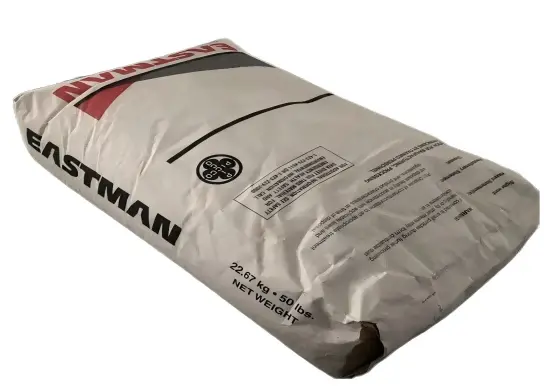
Features Of Eastman Olefin Resin Regalite
Water-White Clarity: Maintains crystal-clear transparency with no yellowing for light-colored formulations.
Superior Adhesion: Provides excellent initial tack and long-term bonding strength.
Thermal Stability: Performs reliably under high-temperature processing conditions.
Hydrogenated Structure: Ensures oxidation resistance and long-term color stability.
Broad Compatibility: Works with multiple polymer systems for versatile formulation options.
Typical Applications Of Eastman Olefin Resin Regalite
Adhesives: Hot-melt adhesives (HMAs) and pressure-sensitive adhesives (PSAs) for packaging, labels, and tapes.
Personal Care: Cosmetics and personal care products requiring clear, stable formulations.
Industrial Bonding: Automotive, electronics, and specialty industrial applications.
Polymer Modification: Enhances performance of rubbers, plastics, and elastomers.
Specifications Of Eastman Olefin Resin Regalite
| Model | Type | Stability/Features |
| Regalite S7125 | Partially hydrogenated hydrocarbon resin | Low odor & color stability upon aging |
|
|
|
| Regalite S5100 | Partially hydrogenated hydrocarbon resin | Excellent thermal/weather resistance |
|
|
|
| Regalite S5090 | Partially hydrogenated hydrocarbon resin | Excellent thermal/weather resistance |
|
| Regalite R1100 | Fully hydrogenated C9 hydrocarbon resin | Resistant to thermal/oxidative degradation |
|
| Regalite R1090 | Fully hydrogenated hydrocarbon resin | Inert, resistant to thermal/oxidative degradation |
|
| Regalite R1010 | Liquid hydrogenated hydrocarbon resin | Excellent thermal/weather resistance |
|
|
|
| Regalite C8010 | Liquid hydrogenated hydrocarbon resin | Low volatility, heat-resistant |
|
| Regalite C6100 | Partially hydrogenated aliphatic resin | Heat/UV resistant |
|
| Regalite C6100L | Hydrogenated hydrocarbon resin | Excellent thermal & weather resistance |
|
| Regalite S1100 | Fully hydrogenated hydrocarbon resin | Antioxidant stabilized, aging-resistant |
|
Eastman Olefin Resin Regalite – Frequently Asked Questions (FAQ)
Q1: What is Eastman Regalite olefin resin primarily used for?
A: Eastman Regalite olefin resins are hydrocarbon-based thermoplastic resins commonly used as tackifiers in pressure-sensitive adhesives, hot-melt adhesives, and rubber compounding systems. They enhance peel adhesion, loop tack, and shear resistance while maintaining thermal stability and compatibility with a wide range of elastomers and polymers.
Q2: Is Regalite compatible with ethylene-propylene rubber (EPR) and styrene-butadiene rubber (SBR)?
A: Yes, Regalite olefin resins exhibit excellent compatibility with both saturated and unsaturated elastomers, including EPR, SBR, natural rubber, and thermoplastic elastomers such as SEBS and TPEs. Compatibility is typically confirmed through visual clarity, homogeneity, and performance testing in the final formulation.
Q3: How should Regalite be incorporated into adhesive or compound formulations?
A: Regalite resins are typically added during the melt compounding stage—either directly to molten polymer or alongside other additives. For optimal dispersion, processing temperatures should remain above the resin’s softening point but below degradation thresholds. Pre-drying is generally not required, though storage in dry conditions is recommended to avoid agglomeration.
Q4: Does Regalite affect the UV stability or oxidation resistance of finished formulations?
A: Regalite olefin resins themselves have limited inherent UV or oxidative stability due to their saturated hydrocarbon structure. When used in outdoor applications, formulators should consider incorporating appropriate stabilizers—such as hindered amine light stabilizers (HALS) or antioxidant packages—to maintain long-term performance.
Q5: What are typical dosage levels of Regalite in hot-melt adhesive formulations?
A: Dosage depends on the base polymer system and desired performance profile, but Regalite is typically used at low concentrations—generally ranging from 0.1% to 2% by weight in thermoplastic elastomer-based hot melts, and up to 15–25% in EVA- or APAO-based systems where higher tack contribution is needed.
 English
 Español
 tiếng việt
 русский