English
 Español
 tiếng việt
 русский
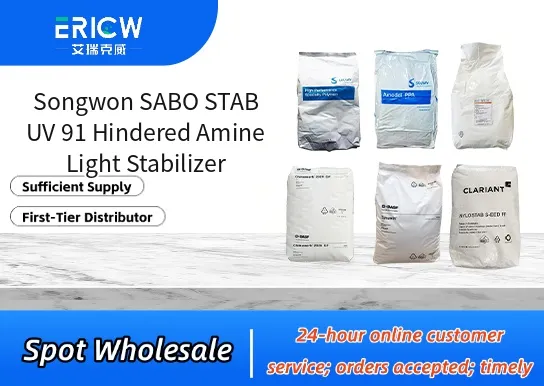
Highly effective long-term light stabilization for polyolefins and engineering plastics under intense UV exposure.
Low volatility and excellent thermal stability, enabling processing at elevated temperatures without significant loss.
Compatible with a broad range of polymers, antioxidants, and other additives—no adverse interactions observed.
Non-discoloring performance ensures retention of original color and clarity in sensitive applications.
Low migration tendency, supporting extended service life in thin-walled and outdoor-exposed parts.
Polypropylene (PP) automotive interior components exposed to sunlight through windows.
HDPE and LDPE agricultural films requiring multi-season UV resistance.
PP and PE geotextiles and geomembranes used in civil engineering and landfill liners.
Outdoor furniture and garden products made from injection-molded or extruded polyolefins.
Blown and cast films for packaging where clarity and weatherability are critical.
| Chemical Type | Hindered amine light stabilizer (HALS), tetramethylpiperidine derivative |
| Product Form | Free-flowing white to off-white granules |
| Appearance | Granular, uniform particle size distribution |
| Primary Applications | Polyolefins (PP, HDPE, LDPE), engineering plastics (PA, PBT) |
| Key Features | Low volatility, non-basic, high compatibility, low extractability |
| Benefits | Extended outdoor lifetime, reduced surface cracking & chalking, improved color retention |
| Recommended Loading Range | 0.1 – 0.5 wt% depending on substrate and exposure conditions |
| Storage Conditions | Store in cool, dry place below 30°C; keep container tightly closed |
Q1: What is the primary mechanism of action for SABO STAB UV 91?
A: SABO STAB UV 91 functions as a hindered amine light stabilizer (HALS) by forming stable nitroxyl radicals that scavenge damaging alkyl radicals generated during photo-oxidation. It also regenerates through cyclic deactivation pathways, providing long-term stabilization without being consumed in a stoichiometric manner.
Q2: In which polymer systems is SABO STAB UV 91 most commonly used?
A: It is widely applied in polyolefins—including PP and HDPE—especially in thin-walled or outdoor applications such as agricultural films, automotive interior parts, and geotextiles. It also shows good compatibility with engineering plastics like ABS and certain thermoplastic elastomers where long-term UV resistance is critical.
Q3: How does SABO STAB UV 91 compare to conventional UV absorbers like benzophenones or benzotriazoles?
A: Unlike UV absorbers that dissipate energy as heat and are consumed over time, SABO STAB UV 91 operates catalytically and offers superior long-term protection—particularly in thick sections or under thermal cycling. It is often used synergistically with UV absorbers to provide both surface and bulk stabilization.
Q4: Is SABO STAB UV 91 suitable for food-contact or medical-grade polymer applications?
A: SABO STAB UV 91 is not pre-approved for direct food-contact or pharmaceutical use under major global regulatory frameworks. Its suitability for such applications depends on full formulation evaluation, end-use conditions, and compliance verification with relevant regional requirements. Customers must conduct appropriate regulatory due diligence prior to use.
Q5: What is the typical dosage range for effective stabilization?
A: Effective dosage generally ranges from 0.1% to 2% by weight, depending on polymer type, processing conditions, expected service life, and exposure severity. It is typically used at low concentrations relative to other additives, and optimal loading should be determined through application-specific weathering trials.
Contact With Us:
E-mail: wangxingqiang@ericwchem.com
Have a Questions? Call Us:
Add:
Building A1, Jiete Industrial Park, Huangpu District, Guangzhou City, Guangdong Province, China