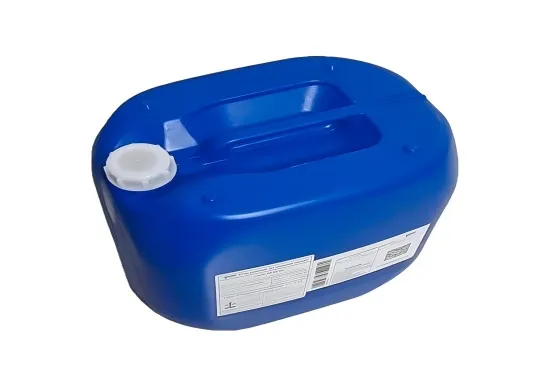
Features Of Croda Hypermer KD25 Dispersants
Broad Solvent Compatibility - Works with diverse solvent systems
Thermal Stability - Performs under high-temperature conditions
Shear Resistance - Maintains stability under mechanical stress
Clean Burnout - Minimal residue for high-purity applications
Process Reliability - Consistent performance in demanding processes
Typical Applications Of Croda Hypermer KD25 Dispersants
Electronic Materials - High-purity component manufacturing
Industrial Coatings - High-temperature resistant formulations
Advanced Ceramics - Precision ceramic production
Specialty Chemicals - Critical process applications
Specifications Of Croda Hypermer KD25 Dispersants
Product Name | Hypermer KD25 |
Chemical Type | Polymeric dispersant (specific structure optimized for particle stabilization) |
Physical Form | Liquid/solid (depending on formulation) |
Primary Function | Enhances dispersion stability, prevents particle agglomeration, reduces viscosity |
Applications | Solvent-based systems for inorganic particles (e.g., metal powders, ceramics, oxides) |
Key Features | High solids loading capacity, broad solvent compatibility, low residue burnout |
Solvent Compatibility | Effective in polar and non-polar solvents |
Benefits | Improved processing efficiency, uniform particle distribution, long-term stability |
Croda Hypermer KD25 Dispersants – Frequently Asked Questions (FAQ)
Q1: What types of pigments and fillers is Hypermer KD25 most effective with?
A: Hypermer KD25 is particularly effective for dispersing high-surface-area inorganic pigments (e.g., titanium dioxide, carbon black) and functional fillers (e.g., silica, calcium carbonate) in non-aqueous systems, including solvent-based coatings, inks, and adhesives.
Q2: Is Hypermer KD25 suitable for water-based formulations?
A: No — Hypermer KD25 is designed specifically for non-aqueous, low-to-medium polarity media. It is not water-compatible or self-emulsifying, and its performance is optimized in organic solvents and resin solutions.
Q3: How does Hypermer KD25 improve stability in pigment concentrates?
A: It provides steric stabilization through its tailored polymeric architecture, reducing particle agglomeration during storage and preventing viscosity drift or settling in millbases and let-down systems.
Q4: What is the typical dosage range for Hypermer KD25 in industrial dispersions?
A: Dosage depends on pigment type, surface area, and formulation complexity, but it is typically used at low concentrations — generally ranging from 0.1% to 2% by weight relative to pigment solids.
 English
 Español
 tiếng việt
 русский