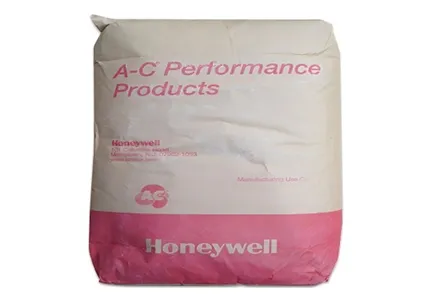
Eastman CA-398-6 is a high-quality low-viscosity solution-grade resin of cellulose acetate series, custom-designed for food contact packaging, architectural coatings, gravure inks and industrial filtration membranes. FDA-certified for food contact, it has good powder fluidity and excellent solubility,

Low Viscosity & Easy Dissolution - Low-viscosity solution-grade feature, fast dissolution speed, suitable for various solution-type processing scenarios
Good System Compatibility - Compatible with various coating resins, ink systems and solvents, strong formula adaptability
Uniform & Stable Film Formation - Dense and uniform film formation, improving coating adhesion and weather stability
Convenient & Efficient Processing - Easy to add and disperse, simplifying production process and shortening processing cycle
Excellent Transparency - High transparency after film formation, suitable for high-transparency coating and film preparation needs
Architectural & Industrial Coatings - Used for exterior architectural and industrial equipment protective coatings to improve weather resistance and decorativeness
Printing Inks - Used for gravure and flexographic printing inks to ensure printing clarity and adhesion
Packaging Coatings - Used for non-food contact packaging and carton coatings to enhance packaging wear resistance
Compensation Films - Used for optical compensation film substrates to ensure film light transmittance and dimensional stability
Paper Coatings - Used for non-food grade paper coatings to improve paper smoothness and water resistance
| Product Model | Cellulose Acetate-CA-398-10 |
| Brand | Eastman (EASTMAN) |
| Chemical Type | Cellulose Acetate (CA) |
| Product Grade | Solution Grade |
| Physical Form | Free-flowing Powder |
| Core Characteristics | Low Viscosity,Easy Dissolution,Good Compatibility,Uniform Film Formation,Excellent Transparency |
| Viscosity | 10 sec(5% Acetone Solution, 25℃) |
| Acetyl Content | 39.8wt% |
| Hydroxyl Content | 1.2wt% |
| Molecular Weight | Medium Molecular Weight |
Q1: What are the key processing advantages of Eastman CA-398-6 compared to other cellulose esters?
A: Eastman CA-398-6 offers improved melt flow and lower melt viscosity than many higher-substituted cellulose acetates, enabling easier extrusion and injection molding. Its balanced acetyl and butyryl substitution also contributes to reduced moisture sensitivity and enhanced thermal stability during processing.
Q2: Is Eastman CA-398-6 suitable for use in coatings requiring good flexibility and adhesion on plastic substrates?
A: Yes — its inherent toughness, low glass transition temperature, and compatibility with common plasticizers make it well-suited for flexible, high-adhesion topcoats and overprint varnishes on polyolefins, ABS, and other engineering plastics.
Q3: How does Eastman CA-398-6 perform in solvent-based versus water-based formulations?
A: It is primarily designed for solvent-based systems and exhibits excellent solubility in common organic solvents such as ketones, esters, and aromatic hydrocarbons. While not inherently water-dispersible, it can be formulated into aqueous systems using appropriate surfactants or emulsification techniques, though performance depends heavily on the specific formulation architecture.
Q4: Can Eastman CA-398-6 be blended with other resins to modify film properties?
A: Yes — it demonstrates good compatibility with a range of thermoplastics and film-forming resins including acrylics, PVC, nitrocellulose, and certain polyurethanes. Blending allows formulators to fine-tune properties such as hardness, flexibility, gloss, and chemical resistance without compromising clarity or processability.
Contact With Us:
E-mail: wangxingqiang@ericwchem.com
Have a Questions? Call Us:
Add:
Building A1, Jiete Industrial Park, Huangpu District, Guangzhou City, Guangdong Province, China
 English
 Español
 tiếng việt
 русский