English
 Español
 tiếng việt
 русский
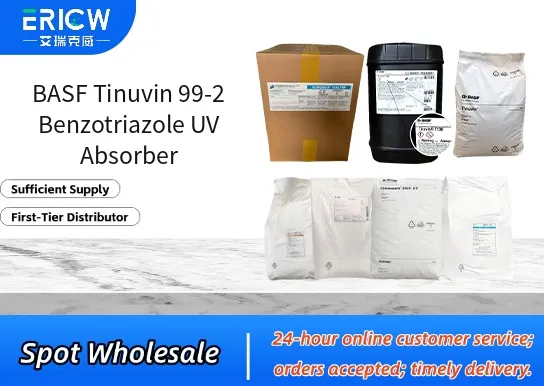
Highly effective broad-spectrum UV absorption in the 300–400 nm range, protecting polymers from photodegradation.
Excellent thermal and hydrolytic stability, enabling processing at elevated temperatures without significant loss of performance.
Low volatility and minimal migration, ensuring long-term UV protection in demanding applications.
Good compatibility with a wide range of thermoplastics, thermosets, and coatings systems.
Non-staining and colorless in final formulations, preserving aesthetic integrity of transparent or light-colored materials.
Automotive interior plastics (e.g., dashboards, trim components).
Outdoor architectural coatings and industrial finishes.
Transparent polycarbonate glazing and lighting covers.
Engineering thermoplastics used in consumer electronics housings.
High-performance polyurethane elastomers and adhesives exposed to sunlight.
| Chemical Type | Benzotriazole-based UV absorber |
| Product Form | Free-flowing crystalline powder |
| Appearance | Off-white to pale yellow crystalline solid |
| Primary Applications | Plastics, coatings, and elastomers requiring long-term UV stability |
| Key Features | Broad UV-A/UV-B absorption, low volatility, high photostability |
| Benefits | Extended service life, reduced yellowing and embrittlement, excellent processing safety |
| Solubility | Soluble in common organic solvents (e.g., THF, chloroform, hot toluene); low solubility in water |
| Storage Conditions | Store in original sealed packaging at room temperature, protected from moisture and direct sunlight |
Q1: What is the primary function of Tinuvin 99-2 in polymer systems?
A: Tinuvin 99-2 is a high-performance benzotriazole-based ultraviolet (UV) absorber designed to protect organic materials—especially polymers—from photodegradation caused by solar UV radiation. It functions by absorbing harmful UV energy in the 290–400 nm range and dissipating it as low-level heat, thereby preserving color, mechanical integrity, and surface appearance over time.
Q2: In which polymer types is Tinuvin 99-2 most commonly used?
A: Tinuvin 99-2 exhibits excellent compatibility and performance in a wide range of thermoplastics and thermosets, including polyolefins (e.g., PP, HDPE), engineering plastics (e.g., ABS, PC blends), coatings, adhesives, and elastomers. Its low volatility and good thermal stability make it especially suitable for high-temperature processing applications such as injection molding and extrusion.
Q3: How does Tinuvin 99-2 compare to other benzotriazole UV absorbers in terms of migration resistance?
A: Due to its optimized molecular structure and high molecular weight, Tinuvin 99-2 offers improved resistance to extraction and blooming compared to many conventional benzotriazole derivatives. This enhances long-term stabilization in demanding applications such as outdoor profiles, automotive trim, and coated substrates where surface integrity and clarity are critical.
Q4: What is the typical dosage range for Tinuvin 99-2 in polymer formulations?
A: Dosage depends on the polymer type, processing conditions, end-use requirements, and presence of other stabilizers. Tinuvin 99-2 is typically used at low concentrations, generally ranging from 0.1% to 2% by weight, with optimal performance often achieved between 0.2% and 1.0% in most industrial applications.
Contact With Us:
E-mail: wangxingqiang@ericwchem.com
Have a Questions? Call Us:
Add:
Building A1, Jiete Industrial Park, Huangpu District, Guangzhou City, Guangdong Province, China