English
 Español
 tiếng việt
 русский
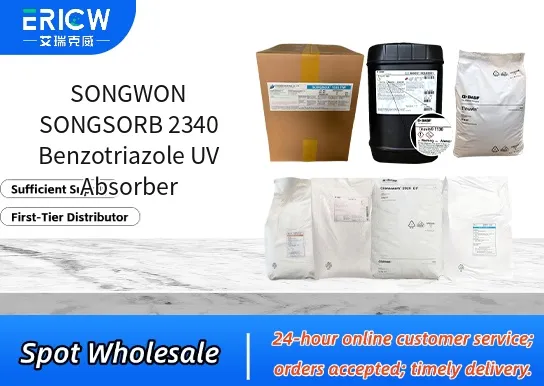
Highly effective UV absorption in the 290–400 nm range, providing robust protection against photodegradation.
Excellent compatibility with a broad range of polymers including polyolefins, styrenics, and engineering plastics.
Good thermal stability up to 280 °C, enabling use in high-temperature processing such as extrusion and injection molding.
Low volatility and minimal migration, ensuring long-term UV stabilization performance in demanding applications.
Non-staining and colorless in final formulations, preserving aesthetic integrity of transparent or light-colored products.
Automotive interior components (dashboards, trim, instrument panels).
Packaging films and containers for UV-sensitive contents (e.g., pharmaceuticals, agrochemicals).
Outdoor construction materials including PVC window profiles and siding.
Coatings and inks requiring durable UV resistance and clarity retention.
Optical-grade polycarbonate and acrylic parts exposed to sunlight.
| Chemical Type | Benzotriazole derivative |
| Product Form | Free-flowing white to off-white crystalline powder |
| Appearance | Crystalline solid |
| Molecular Weight | Approx. 315 g/mol |
| Solubility | Soluble in common organic solvents (e.g., chloroform, THF, toluene); low solubility in water |
| Primary Applications | UV stabilization of plastics, coatings, and adhesives |
| Key Features | High UV absorbance, low volatility, polymer compatibility |
| Benefits | Extended service life, reduced yellowing, improved weatherability |
Q1: What is the primary function of SONGSORB 2340 in polymer systems?
A: SONGSORB 2340 is a benzotriazole-based ultraviolet (UV) absorber designed to protect organic materials—particularly polymers—from photochemical degradation caused by UV radiation. It functions by absorbing harmful UV energy in the 290–400 nm range and dissipating it as low-level heat, thereby preserving color, mechanical integrity, and surface appearance during outdoor exposure.
Q2: Which polymer matrices is SONGSORB 2340 commonly used in?
A: SONGSORB 2340 demonstrates good compatibility and performance in a wide range of thermoplastics and thermosets, including polyolefins (e.g., PP, HDPE), engineering plastics (e.g., ABS, PC blends), coatings, adhesives, and elastomers. Its effectiveness is particularly valued in applications requiring long-term UV stability without significant yellowing or volatility issues.
Q3: How does SONGSORB 2340 compare to hydroxyphenyltriazine UV absorbers in terms of thermal stability?
A: As a benzotriazole derivative, SONGSORB 2340 offers excellent thermal stability suitable for standard polymer processing conditions—including extrusion and injection molding—but generally exhibits lower inherent thermal resistance than high-performance hydroxyphenyltriazines. It is well-suited for applications where balanced UV protection, cost-effectiveness, and processability are prioritized.
Q4: What is the typical dosage range for SONGSORB 2340 in polymer formulations?
A: Dosage depends on formulation requirements, substrate thickness, and end-use exposure conditions. In most polymer applications, SONGSORB 2340 is typically used at low concentrations—generally ranging from 0.1% to 2% by weight—with optimal loading determined through application-specific weathering trials and performance validation.
Q5: Is SONGSORB 2340 compatible with common polymer additives such as HALS and antioxidants?
A: Yes, SONGSORB 2340 is generally compatible with hindered amine light stabilizers (HALS), phenolic antioxidants, and phosphite processing stabilizers. Synergistic effects are often observed when combined with HALS, especially in polyolefin applications, enhancing overall photostabilization performance under demanding UV exposure conditions.
Contact With Us:
E-mail: wangxingqiang@ericwchem.com
Have a Questions? Call Us:
Add:
Building A1, Jiete Industrial Park, Huangpu District, Guangzhou City, Guangdong Province, China