Features Of EFKA 2022 Defoamer
Efficient Defoaming: Rapidly removes microfoam and macrofoam, enhancing surface quality.
Long-Lasting Anti-Foaming: Provides continuous foam suppression, ideal for high-shear environments.
High Compatibility: Works well with various water-based systems, including pure acrylic and styrene-acrylic emulsions.
Eco-Friendly: Complies with environmental standards, suitable for indirect food contact applications.
Cost-Effective: Boasts a high cost-performance ratio, fit for large-scale use.
Typical Applications Of EFKA 2022 Defoamer
Polyurethane Curtain Coating and Baking Paints: Applied in solvent-based and solvent-free polyurethane coatings to achieve bubble-free and pinhole-free surfaces.
Two-Component Epoxy Resin Systems: Suitable for two-component epoxy resin coatings, boosting coating effects.
Alkyd Resin Baking Paints: Used in alkyd resin or saturated polyester-based baking paints to enhance surface smoothness.
Medium Oil Alkyd Resin Coatings: Suitable for medium oil alkyd resin air-drying industrial coatings, resolving bubble issues during application.
Specifications Of EFKA 2022 Defoamer
Chemical Name | Silicone-based defoamer solution |
Appearance | Clear, colorless liquid |
Density (20℃) | 0.89 g/cm³ |
Refractive Index | 1.470 |
Flash Point | 19℃ (66℉) |
VOC Content | >90% |
Solvent | Xylene/Methoxypropyl acetate/Ethyl acetate/Butyl acetate |
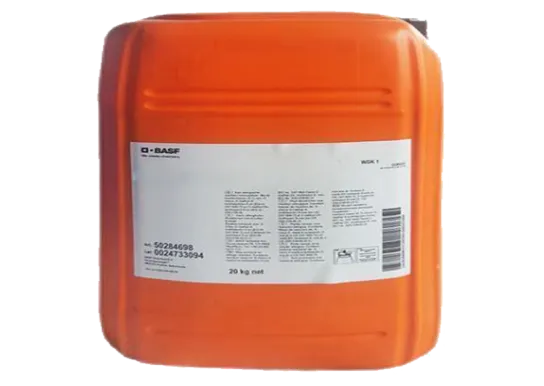
Packaging | 25kg/drum, 170kg/drum |
EFKA 2022 Defoamer – Frequently Asked Questions (FAQ)
Q1: What types of industrial formulations is EFKA 2022 Defoamer specifically designed for?
A: EFKA 2022 Defoamer is formulated for use in water-based industrial coatings, architectural paints, adhesives, and construction mortars where rapid foam suppression and long-term defoaming stability are required. It performs effectively in both low- and high-shear processing environments.
Q2: How should EFKA 2022 Defoamer be incorporated into a formulation?
A: It is typically added during the let-down or post-addition stage, after high-shear dispersion of pigments and fillers. Pre-dilution with water or a compatible solvent may improve uniform distribution, especially in low-viscosity systems.
Q3: Is EFKA 2022 Defoamer compatible with common rheology modifiers and biocides?
A: Yes, EFKA 2022 Defoamer demonstrates good compatibility with associative thickeners (e.g., HEUR), cellulosics, and standard isothiazolinone- and benzisothiazole-based biocides. Compatibility testing under actual formulation conditions is recommended to confirm performance synergy.
Q4: Does EFKA 2022 Defoamer affect gloss or film appearance in finished coatings?
A: When used within the recommended dosage range, it generally does not impair gloss retention or cause surface defects such as craters or haze—provided proper incorporation and compatibility are verified during formulation development.
Q5: What is the typical dosage range for EFKA 2022 Defoamer?
A: Dosage depends on formulation complexity and foam severity, but it is generally effective at low concentrations—typically ranging from 0.1% to 2.0% by weight of the total formulation. Optimization through lab-scale trials is advised for each specific application.
 English
 Español
 tiếng việt
 русский