English
 Español
 tiếng việt
 русский
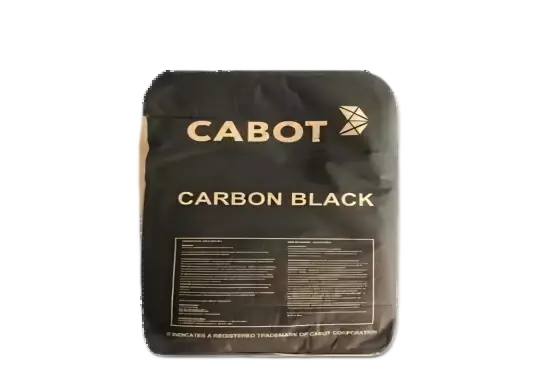
The Cabot Regal series represents a premium portfolio of carbon blacks designed for high-demand coating and ink applications requiring precision performance. Utilizing tailored surface engineering and controlled aggregate structures, these grades deliver optimized electrical insulation, tinting efficiency, and rheological stability across water-based, solvent-borne, and UV-curable formulations.
Developed for critical industrial environments, the series excels in maintaining dielectric integrity (volume resistivity >10¹⁴ Ω·cm) while ensuring uniform film formation and scratch resistance in thin-layer systems. Proprietary surface modification enhances dispersibility, reducing processing energy and enabling compatibility with high-solid formulations without viscosity trade-offs.
High tinting strength for vibrant, consistent coloration
Excellent electrical insulation properties (volume resistivity >10¹⁴ Ω·cm)
Superior dispersibility for smooth, uniform film formation
Low viscosity and thermal stability (up to 400°C) for efficient processing
High purity with minimal ash and volatiles for reliable performance
High-performance inks (flexographic, gravure, UV-curable)
Industrial and automotive coatings with gloss retention
Insulating layers for cables and electronic components
Packaging and specialty plastic applications
| Model | Density (g/cm³ or g/l) | DBP Oil Absorption (cc/100g) | Particle Size (nm) | Tinting Force (ASTM) |
| REGAL 330R | 1.7-1.9 @ 20°C | 174-192 | 24 | 130 |
| REGAL 660R | 256.3 (Powder), 96.1 (Granular) | 174/192 | 30/30 | 87/87 |
| REGAL 400R | 256.3 (Powder), 96.1 (Granular) | 174/192 | 30/30 | 87/87 |
| REGAL 250R | 240.3 (Powder), 496.6 (Granular) | 62 (Powder), 60 (Granular) | 24 | 130 |
Q1: What are the primary application areas for Cabot Carbon Black Regal series?
A: The Regal® series is widely used in high-performance coatings, industrial inks, and specialty plastics where excellent dispersion, consistent jetness, and strong UV protection are required. It is also employed in conductive compounds and certain elastomer applications demanding good processability and surface quality.
Q2: How does Regal differ from other Cabot carbon black grades like Vulcan or Monarch?
A: Regal grades are engineered for superior dispersion stability and lower viscosity in liquid systems compared to many furnace blacks. They typically offer a balanced combination of particle size, structure, and surface chemistry—optimized for applications requiring high gloss, low haze, and minimal grit formation—notably in premium coatings and ink formulations.
Q3: What are recommended dispersion methods for Regal carbon black in solvent-based coatings?
A: High-shear mixing, bead milling, or pearl milling is generally recommended to achieve optimal dispersion. Pre-wetting with compatible resins or surfactants improves deagglomeration efficiency. Regal grades respond well to conventional dispersion equipment but benefit from controlled temperature and residence time to maintain colloidal stability.
Q4: Is Regal suitable for use in food-contact or pharmaceutical-grade polymer compounds?
A: Regal grades are not pre-qualified for direct food-contact or pharmaceutical applications. Their suitability depends on final formulation validation, regulatory review by the end-user, and compliance with applicable regional requirements—including extractables testing and intended use conditions.
Q5: What is the typical dosage range for Regal carbon black in plastic masterbatches?
A: Dosage varies significantly based on the base polymer, desired color strength, conductivity needs, and processing method—but generally ranges from 0.1% to 2% by weight. Lower loadings often suffice for tinting and UV stabilization, while higher concentrations may be used for functional properties like static dissipation.
Contact With Us:
E-mail: wangxingqiang@ericwchem.com
Have a Questions? Call Us:
Add:
Building A1, Jiete Industrial Park, Huangpu District, Guangzhou City, Guangdong Province, China