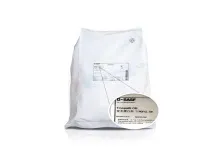
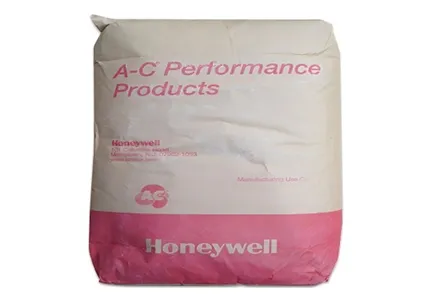
BASF LAROSTAT 902A is an antistatic agent with the key features of low resistance and long - lasting antistatic performance. Classified as an amide, it has obtained Mil Spec B - 81705C approval. It is mainly applied in the plastic industry, helping plastics to eliminate static electricity effectively.
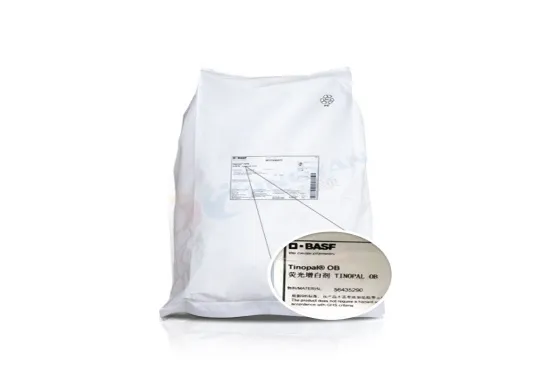
Low resistance: Enables rapid static dissipation, reducing electrostatic accumulation risks
Long-lasting antistatic effect: Maintains stable performance for long-term product safety and normal operation
Standard compliant: Meets Mil Spec B-81705C standards, ensuring reliability in relevant applications
Plastic-specific: Good compatibility with various plastic materials, optimized for plastic application scenarios
Applied in plastic processing (polyethylene, polypropylene, polycarbonate, etc.)
Added during manufacturing to endow finished plastic products with antistatic properties
Suitable for static-controlled applications (e.g., electronic product casings, packaging materials)
Brand | BASF |
Model | LAROSTAT 902A |
Type | Amide |
Approval | Mil Spec B - 81705C |
Key Features | Low resistance, long - lasting antistatic |
Application Industry | Plastic application |
Packaging Specification | 18KG/barrel |
Q1: What types of polymers is LAROSTAT 902A compatible with?
A: LAROSTAT 902A is specifically designed for use in thermoplastic polymers including polyolefins (e.g., PP and HDPE), ABS, PS, and engineering plastics such as PA and PC. It exhibits good compatibility and dispersion during melt processing.
Q2: How does LAROSTAT 902A provide antistatic performance?
A: It functions as an internal antistatic agent by migrating to the polymer surface over time, where it absorbs ambient moisture to form a conductive layer that dissipates static charge. Performance develops gradually after processing and improves under typical humidity conditions.
Q3: Is LAROSTAT 902A suitable for applications requiring food contact compliance?
A: LAROSTAT 902A is not pre-approved for food-contact applications under major regulatory frameworks. Customers must conduct their own regulatory assessment and validation based on intended use, processing conditions, and applicable regional requirements.
Q4: What is the typical dosage range for effective antistatic performance?
A: Effective dosage generally ranges from 0.1% to 2% by weight, depending on the base polymer, processing method, required surface resistivity, and environmental conditions. Optimization through small-scale trials is recommended for each formulation.
Q5: Does LAROSTAT 902A affect the mechanical or optical properties of the final part?
A: At recommended dosage levels, LAROSTAT 902A typically has minimal impact on tensile strength, impact resistance, or clarity—particularly in transparent systems like PS or PC. However, excessive loading may influence surface gloss or long-term aging behavior, so balanced formulation is advised.
Contact With Us:
E-mail: wangxingqiang@ericwchem.com
Have a Questions? Call Us:
Add:
Building A1, Jiete Industrial Park, Huangpu District, Guangzhou City, Guangdong Province, China
 English
 Español
 tiếng việt
 русский