English
 Español
 tiếng việt
 русский
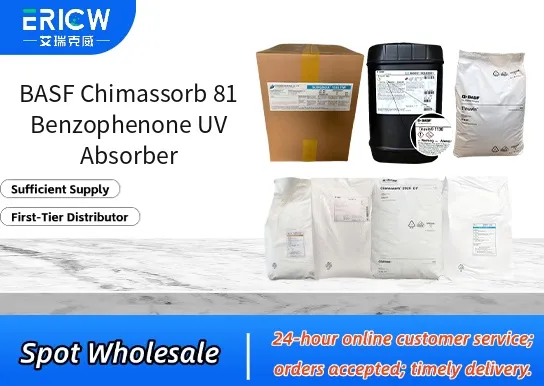
Highly effective UV-A and UV-B absorption in the 290–400 nm range.
Excellent compatibility with a broad range of polymers, including polyolefins, PVC, and styrenics.
Good thermal stability up to 220 °C, supporting high-temperature processing such as extrusion and injection molding.
Low volatility and minimal migration, ensuring long-term stabilization performance in thin films and surface applications.
Non-discoloring formulation that maintains clarity and color fidelity in transparent and light-colored materials.
Agricultural mulch films and greenhouse covers.
Automotive interior trim and instrument panels.
Coated textiles and technical fabrics exposed to outdoor conditions.
Packaging films for pharmaceuticals and premium consumer goods.
Exterior profiles and sheets in rigid PVC construction applications.
| Chemical Type | Benzophenone derivative (2-Hydroxy-4-methoxybenzophenone) |
| Product Form | Fine crystalline powder |
| Appearance | White to off-white free-flowing powder |
| Melting Point | 62–65 °C |
| Solubility (25 °C) | Soluble in common organic solvents (e.g., acetone, ethyl acetate, toluene); insoluble in water |
| UV Absorption Maxima | ~360 nm (in ethanol) |
| Primary Applications | Polyolefins, PVC, ABS, PS, coatings, adhesives, and inks |
| Key Features | Photostable, low volatility, non-staining, polymer-compatible UV absorber |
Q1: What is the primary function of Chimassorb 81 in polymer systems?
A: Chimassorb 81 is a benzophenone-based ultraviolet (UV) absorber designed to protect organic materials—especially polymers—from photodegradation caused by UV radiation. It functions by absorbing harmful UV energy (primarily in the 290–400 nm range) and dissipating it as low-level heat, thereby extending product service life and maintaining physical properties during outdoor exposure.
Q2: In which polymer types is Chimassorb 81 most commonly used?
A: Chimassorb 81 exhibits good compatibility and performance in a wide range of thermoplastics and thermosets, including polyolefins (e.g., PP, HDPE), PVC, ABS, polycarbonate blends, and certain engineering plastics. Its moderate polarity and thermal stability make it particularly suitable for applications requiring processing at elevated temperatures, such as extrusion or injection molding.
Q3: How does Chimassorb 81 compare to hindered amine light stabilizers (HALS) in terms of stabilization mechanism?
A: Chimassorb 81 operates as a preventive UV absorber, intercepting UV radiation before it initiates photochemical degradation. In contrast, HALS act as radical scavengers that interrupt degradation pathways *after* initiation. For optimal long-term weatherability—especially in thick sections or pigmented systems—a synergistic combination of Chimassorb 81 with a compatible HALS is often recommended.
Q4: Is Chimassorb 81 suitable for food-contact or pharmaceutical packaging applications?
A: Chimassorb 81 is not generally approved for direct food-contact applications under major global regulatory frameworks. Its use in packaging intended for food, beverages, or pharmaceuticals requires thorough evaluation against applicable regional regulations and must be supported by appropriate migration testing and compliance documentation from qualified suppliers.
Q5: What are typical dosage guidelines for effective UV protection with Chimassorb 81?
A: Effective dosage depends on polymer type, part thickness, expected UV exposure intensity, and presence of other additives. Chimassorb 81 is typically used at low concentrations, generally ranging from 0.1% to 2% by weight. Optimization should be performed through accelerated weathering tests and real-time exposure trials to balance performance, clarity, and cost-efficiency.
Contact With Us:
E-mail: wangxingqiang@ericwchem.com
Have a Questions? Call Us:
Add:
Building A1, Jiete Industrial Park, Huangpu District, Guangzhou City, Guangdong Province, China