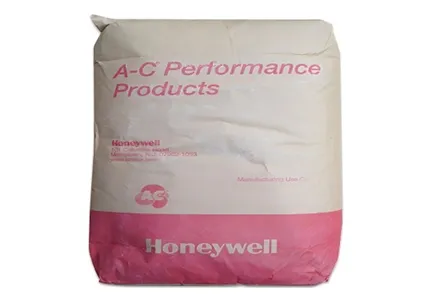
Affinity™ SQ 1503UE is a polyolefin plastomer made with Dow’s INSITE™ technology, optimized for rotational moulding. It combines easy demoulding with the flexibility and elastic recovery of polar copolymers, featuring excellent heat and UV stability, wide processing latitude, and long-lasting performance.
Optimized for rotational moulding with easy demoulding, reducing production cycle times and improving efficiency.
Delivers flexibility and elastic recovery comparable to EBA, EVA, and plasticized PVC, without the need for polar copolymer feedstocks.
Enhanced heat and UV stability for extended service life, even in outdoor and demanding environments.
Wide processing latitude and excellent color retention, supporting consistent, high-quality finished parts.
Supplied as a free-flowing powder (500 μm particle size) for uniform feeding and processing in rotational moulding equipment.
Marine and offshore applications such as buoys and fenders, leveraging its durability and UV resistance.
Highway safety products including road furniture and crash barriers, requiring impact resistance and long-term performance.
Rotationally moulded tanks and containers for chemical storage, benefiting from its chemical resistance and ESCR performance.
Outdoor recreational equipment like kayaks and playground components, where flexibility and weatherability are key.
Protective covers and housings for industrial equipment, relying on its toughness and dimensional stability.
| Property | Nominal Value (Unit) |
|---|---|
| Physical | |
| Density | 0.900 g/cm³ |
| Melt Mass-Flow Rate (MFR) (190°C/2.16 kg) | 6.0 g/10 min |
| Environmental Stress-Cracking Resistance (ESCR) | >1000 hr |
| Mechanical | |
| Tensile Stress, Yield | 5.00 MPa |
| Tensile Stress, Break (Compression / Rotational Molded) | 21.0 / 19.0 MPa |
| Tensile Strain, Break (Compression / Rotational Molded) | 1200 / 1000 % |
| Flexural Modulus, 2% Secant (Compression / Rotational Molded) | 81.0 / 70.0 MPa |
| Tensile Set (100% Strain) | 10 % |
| Impact | |
| Falling Dart Impact (-20°C) | >150 J/cm |
| Hardness | |
| Shore A Hardness | 92 |
| Shore D Hardness | 40 |
| Thermal | |
| Vicat Softening Temperature | 82.0 °C |
| Melting Temperature (DSC) | 97.0 °C |
| Peak Crystallization Temperature (DSC) | 80.0 °C |
Q1: What is the primary function of AFFINITY™ SQ 1503 UE in polymer formulations?
A: AFFINITY™ SQ 1503 UE is an ethylene-octene copolymer-based impact modifier designed to enhance toughness and low-temperature impact resistance in rigid polyolefin systems—particularly in polypropylene homopolymers and copolymers—without significantly compromising stiffness or processability.
Q2: How does AFFINITY™ SQ 1503 UE differ from conventional EPDM or EPR impact modifiers?
A: Unlike traditional elastomeric impact modifiers, AFFINITY™ SQ 1503 UE offers superior compatibility with polypropylene due to its narrow molecular weight distribution and tailored comonomer content, resulting in finer dispersion, improved clarity in thin sections, and more consistent mechanical property enhancement across processing conditions.
Q3: Is AFFINITY™ SQ 1503 UE suitable for applications requiring regulatory compliance for food contact or medical devices?
A: AFFINITY™ SQ 1503 UE is manufactured under Dow’s stringent quality control systems and is commonly used in applications where regulatory compliance is required; however, final compliance depends on the full formulation, processing conditions, and applicable regional regulations—users must conduct their own evaluation and validation.
Q4: What are typical processing recommendations for incorporating AFFINITY™ SQ 1503 UE into PP compounds?
A: It is typically incorporated via twin-screw extrusion at standard polypropylene processing temperatures (200–240 °C); good dispersion is achieved with moderate shear, and it generally requires no pre-drying. Dosage depends on formulation requirements but is typically used at low concentrations to balance impact performance and rigidity.
Contact With Us:
E-mail: wangxingqiang@ericwchem.com
Have a Questions? Call Us:
Add:
Building A1, Jiete Industrial Park, Huangpu District, Guangzhou City, Guangdong Province, China
 English
 Español
 tiếng việt
 русский