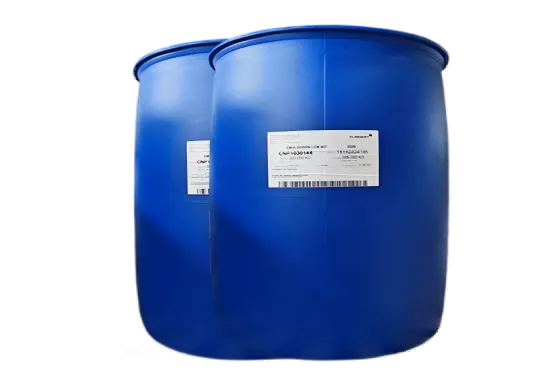
Features Of Clariant Sapogenat T 040 Nonionic Emulsifier
Foam Control - Reduces foam by 30–50% in high-pressure cleaning systems
Hard Water Tolerance - Maintains performance in water with up to 500 ppm CaCO₃ hardness
Multi-Surfactant Synergy - Compatible with LAS, SLES, and betaines for customized formulations
Eco-Design - Readily biodegradable (OECD 301F) with<1% VOC content
Cold Process Adaptability - Eliminates heating requirements for energy-efficient production
Typical Applications Of Clariant Sapogenat T 040 Nonionic Emulsifier
Machine Dishwashing - Low-foam rinse aids for commercial dishwashers (2–5% dosage)
Industrial Degreasers - Heavy-duty alkaline cleaners for metal surfaces
Textile Scouring - Emulsifies oils in fabric pretreatment baths
Institutional Cleaners - Floor cleaners with reduced slip hazards
Pesticide Tank-Mix - Adjuvant for herbicide spray solutions
Specifications Of Clariant Sapogenat T 040 Nonionic Emulsifier
| Chemical Base | Tributylphenol ethoxylate (4 EO) |
| Active Content | 100% |
| HLB Value | 8 |
| Cloud Point (1% BDG) | 27.5°C |
| Viscosity (25°C) | 150–300 mPa·s |
| pH (5% solution) | 6–8 |
Clariant Sapogenat T 040 Nonionic Emulsifier – Frequently Asked Questions (FAQ)
Q1: What types of oil phases is Sapogenat T 040 particularly effective for emulsifying?
A: Sapogenat T 040 demonstrates strong performance with medium- to long-chain triglycerides, mineral oils, and silicone fluids—especially in systems requiring stable, low-viscosity O/W emulsions with good cold stability.
Q2: How does Sapogenat T 040 perform under high-electrolyte conditions?
A: As a nonionic surfactant, Sapogenat T 040 maintains emulsion stability in the presence of salts and hard water, making it well-suited for industrial cleaning formulations or agrochemical concentrates where ionic interference is common.
Q3: Is Sapogenat T 040 compatible with common anionic or cationic co-surfactants?
A: Yes—it is generally compatible with many anionic surfactants (e.g., alkyl sulfates, alkyl ether sulfates) and selected cationic species when used at appropriate ratios and pH levels; however, compatibility testing is recommended for each specific formulation due to potential micellar interactions.
Q4: What is the typical dosage range for Sapogenat T 040 in emulsion-based products?
A: Dosage depends on the oil phase, desired droplet size, and stability requirements, but it is typically used at low concentrations—generally ranging from 0.1% to 2% by weight of the total formulation.
 English
 Español
 tiếng việt
 русский