English
 Español
 tiếng việt
 русский
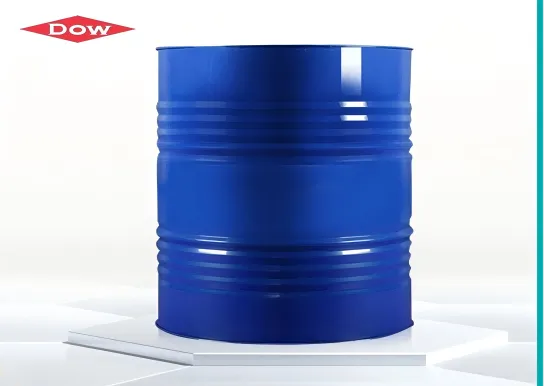
Dow industrial grade triethanolamine is a multifunctional amine additive in Dow's industrial grade basic chemical raw material series. Designed for cosmetic formulation, industrial synthesis, building materials and other diverse systems, it is a weakly alkaline functional raw material with emulsification, neutralization, dispersion and other multiple effects
Multi-Functional Enhancement - Integrates emulsification, dispersion and solubilization effects, meeting multiple formulation needs in one stop
Excellent System Compatibility - Miscible with water and most organic solvents, suitable for water-based and solvent-based diverse systems
Stable Chemical Performance - Stable chemical properties and good temperature resistance, ensuring formulation storage and use stability
Efficient Grinding & Setting Aiding - Improves material grinding efficiency, accelerates building material solidification, optimizes process performance
Rubber Chemical Field - Additive for nitrile rubber polymerization, optimizing rubber polymerization process and product performance
Building Materials Field - Concrete setting accelerator and cement grinding aid, improving building material strength and production efficiency
Metal Processing Field - Cyanide-free electroplating additive and lubricant additive, achieving anti-corrosion and lubrication enhancement
Coating & Ink Field - Coating neutralizer and dye dispersant, improving film and color development stability
| English Alias | TEA |
| CAS No. | 102-71-6 |
| Molecular Formula | C₆H₁₅NO₃ |
| Molecular Weight | 149.19 g/mol |
| Physical Form | Colorless oily liquid above 21℃, white solid below 21℃ |
| Odor | Slight ammonia odor |
| Melting Point | 21 ℃ |
| Boiling Point (760 mmHg) | 335.4 ℃ |
| Relative Density (25℃) | 1.171 g/cm³ |
Q1: What is the primary function of Dow Triethanolamine in personal care formulations?
A: Dow Triethanolamine is commonly used as a pH adjuster and stabilizer in personal care products such as shampoos, liquid soaps, and lotions. It helps neutralize acidic components (e.g., fatty acids or alkyl sulfates) to form stable, water-soluble salts while contributing to viscosity control and mildness.
Q2: Is Dow Triethanolamine compatible with anionic surfactants?
A: Yes, it is widely used to neutralize and solubilize anionic surfactants—particularly fatty acids and sulfate-based systems—enhancing foaming, clarity, and formulation stability. Compatibility should be confirmed empirically in complex multi-component systems.
Q3: How does Dow Triethanolamine compare to monoethanolamine (MEA) or diethanolamine (DEA) in terms of irritation potential?
A: Triethanolamine generally exhibits lower skin and eye irritation potential than MEA and DEA due to its higher molecular weight, reduced volatility, and weaker basicity. However, final product safety depends on overall formulation, concentration, and exposure conditions—not solely on the amine type.
Q4: Can Dow Triethanolamine be used in industrial cleaning applications?
A: Yes, it serves as an effective corrosion inhibitor, chelating agent, and alkalinity booster in heavy-duty cleaners and metalworking fluids. Its ability to buffer pH and sequester metal ions contributes to improved cleaning efficiency and equipment protection.
Contact With Us:
E-mail: wangxingqiang@ericwchem.com
Have a Questions? Call Us:
Add:
Building A1, Jiete Industrial Park, Huangpu District, Guangzhou City, Guangdong Province, China