Features Of BASF Efka PX 4701 Active Polymer Dispersants
Pigment Mastery - Optimizes carbon black and organic pigment dispersion
Viscosity Control - Lowers system viscosity by 30-40%
Storage Assurance - Prevents sedimentation for 12+ months
Universal Formulation - Compatible with all major ink technologies
Eco-Advanced - Solvent-free, 100% active content
Typical Applications Of BASF Efka PX 4701 Active Polymer Dispersants
UV Inks - Improves flexo/litho/screen printing performance
Inkjet Solutions - Enhances color vibrancy in solvent/water-based inks
Pigment Concentrates - Ideal for high-solid RFPC formulations
Specifications Of BASF Efka PX 4701 Active Polymer Dispersants
Chemical Name | Acrylic Block Copolymer |
Appearance | Amber to Brown Liquid |
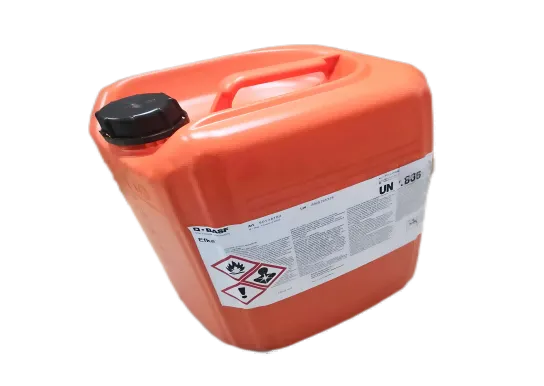
Brand | BASF Efka |
Model | EFKA PX4701 (formerly Efka-7701) |
Active Content | 99.9% |
Amine Value | 40 mg KOH/g |
VOC Content | <2.5% |
Density | 0.9-1.2 g/cm³ |
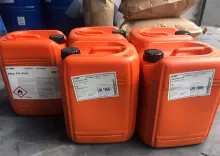
Packaging | 25kg/drum |
Origin | Germany |
BASF Efka PX 4701 Active Polymer Dispersants – Frequently Asked Questions (FAQ)
Q1: What is the primary function of Efka PX 4701 in pigment dispersion systems?
A: Efka PX 4701 is a high-molecular-weight active polymer dispersant designed to provide strong steric stabilization of organic and inorganic pigments in solvent-borne and high-solids coatings. It anchors effectively to pigment surfaces and extends into the medium to prevent flocculation and settling, supporting excellent color development, gloss, and long-term storage stability.
Q2: Is Efka PX 4701 suitable for water-based formulations?
A: No — Efka PX 4701 is specifically formulated for use in solvent-borne and high-solids coating systems. It is not compatible with aqueous media due to its non-ionic, hydrophobic polymer architecture. For water-based applications, BASF recommends alternative dispersants from the Efka or Disperbyk product families optimized for aqueous stabilization.
Q3: How should Efka PX 4701 be incorporated into a formulation?
A: It is typically added during the pigment grinding stage, either neat or pre-diluted in a compatible solvent or resin solution. Optimal performance is achieved when added before or simultaneously with the pigment, allowing full interaction between the dispersant anchor groups and the pigment surface. Post-addition after grinding is generally less effective.
Q4: What types of resins or binders is Efka PX 4701 compatible with?
A: Efka PX 4701 demonstrates broad compatibility with common solvent-borne binder systems, including acrylics, alkyds, polyesters, epoxy esters, and urethane resins. Compatibility should always be verified experimentally within the final formulation, especially when high resin polarity or reactive functionality is present.
Q5: Does Efka PX 4701 contribute to film properties such as gloss or scratch resistance?
A: Yes — by enabling finer pigment deagglomeration and more uniform distribution, Efka PX 4701 supports improved surface smoothness and optical clarity, which can enhance gloss and distinctness of image. Its polymeric nature may also impart mild film-cohesiveness benefits, though it is not primarily designed as a film-forming additive.
 English
 Español
 tiếng việt
 русский