English
 Español
 tiếng việt
 русский
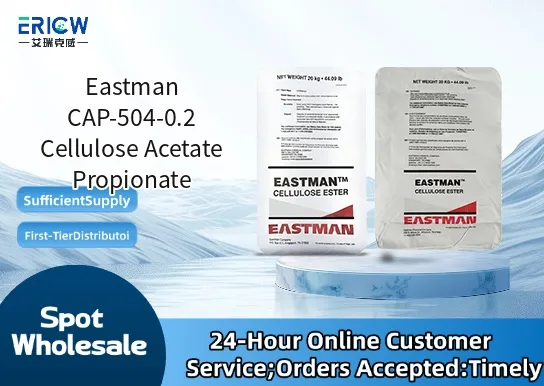
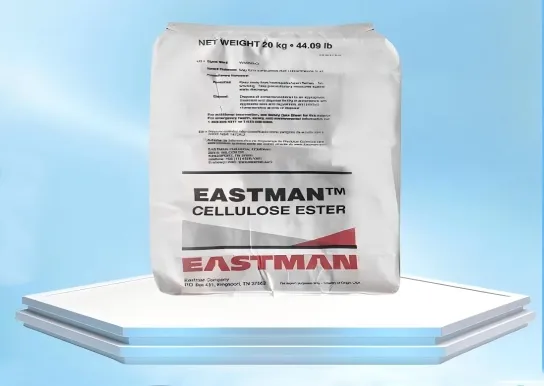
Eastman CAP-482-20 is a high-quality high-viscosity powder resin of cellulose acetate propionate series, custom-designed for printing inks, industrial coatings, nail lacquer top coats, overprint varnishes and other fields. It has excellent film-forming performance
High Viscosity for Film-Forming - High viscosity, excellent film-forming property, improving the fullness of coatings and paint films
Good Compatibility - Compatible with products of the same series, can be compounded for diverse formula requirements
Low Odor & Stability - Low odor, stable system compatibility, good storage and usability
Excellent Solubility - High solubility, easy to mix with various solvents for convenient processing
Printing Inks - Used for gravure, flexo and commercial printing inks to improve film-forming and color development
Industrial Coatings - Used for architectural, wood and automotive refinishing coatings to enhance film fullness and adhesion
Nail Lacquer Top Coats - Used for nail lacquer top coats to improve surface gloss and wear resistance
Overprint Varnishes - Used for various overprint varnishes to improve print surface protection and gloss
| Brand | Eastman |
| Chemical Type | Cellulose Acetate Propionate (CAP) |
| Physical Form | Powder |
| Viscosity | 20 sec; 76.5 poise |
| Acetyl Content | 1.3wt% |
| Propionyl Content | 48wt% |
| Hydroxyl Content | 1.7wt% |
| Ash Content | ≤3.0% |
| Glass Transition Temperature (Tg) | 147℃ |
| Melting Temperature Range | 188-210℃ |
| Specific Gravity | 1.22 |
| Refractive Index (25°C/D) | 1.475n |
Q1: What is the primary functional role of CAP-482-20 in coating and film-forming applications?
A: CAP-482-20 serves primarily as a film-former and binder, providing excellent clarity, toughness, and resistance to moisture and oils. Its balanced acetyl and propionyl substitution imparts improved solubility in a wider range of common organic solvents compared to standard cellulose acetates, facilitating robust and uniform film development.
Q2: How does CAP-482-20 differ from standard cellulose acetate (CA) or cellulose acetate butyrate (CAB)?
A: CAP-482-20 is a cellulose acetate propionate (CAP), meaning it contains both acetyl and propionyl substituents — unlike CA (acetyl only) or CAB (acetyl and butyryl). This unique substitution profile delivers enhanced flexibility, lower melt viscosity, and broader solvent compatibility, particularly in ketones, esters, and chlorinated hydrocarbons, without requiring plasticizers in many formulations.
Q3: Is CAP-482-20 suitable for use in food-contact coatings or pharmaceutical applications?
A: CAP-482-20 is manufactured under controlled conditions appropriate for industrial and performance applications. While certain CAP grades are evaluated for regulatory compliance in specific end uses, users must independently verify suitability based on final formulation, processing conditions, and applicable regional regulations — Eastman does not pre-certify this grade for direct food contact or pharmaceutical use without additional qualification.
Q4: What solvent systems are most commonly recommended for dissolving CAP-482-20?
A: CAP-482-20 exhibits good solubility in acetone, methyl ethyl ketone (MEK), methyl isobutyl ketone (MIBK), ethyl acetate, and dichloromethane. It has limited solubility in alcohols and aromatic hydrocarbons alone, but co-solvent blends (e.g., MEK/ethanol) may be used to fine-tune evaporation rate and film properties.
Q5: How should CAP-482-20 be handled and stored to maintain optimal performance?
A: Store in a cool, dry place in original sealed containers, protected from moisture, heat, and direct sunlight. Prolonged exposure to humid environments may lead to slight moisture uptake, potentially affecting solution viscosity or clarity — conditioning at controlled humidity prior to use is recommended if storage conditions are uncertain.
Contact With Us:
E-mail: wangxingqiang@ericwchem.com
Have a Questions? Call Us:
Add:
Building A1, Jiete Industrial Park, Huangpu District, Guangzhou City, Guangdong Province, China