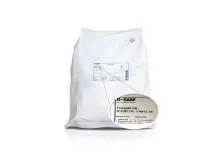
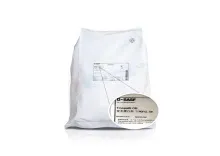
Features Of Clariant KSN Fluorescent Brightener
High whitening brightness, providing neutral to blue-violet bright shade for light-toned products.
Thermal stability fits high-temperature processing of plastics and chemical fiber polymers.
Excellent migration resistance in LDPE, avoiding post-processing precipitation or discoloration.
Flexible dosage range, adapting to whitening needs of different materials (plastics/fibers).
Compatible with multiple processing steps, usable directly or as brightening masterbatch.
Typical Applications Of Clariant KSN Fluorescent Brightener
Suitable for optical whitening of films, injection/compression molded plastic products.
Fits dyeing whitening of chemical fibers, bristles and colored wax hairs.
Used to improve whiteness and gloss of thermoplastic PVC and rigid PVC.
Applied in whitening of polyester fibers with uniform and long-lasting effect.
Compatible with whitening addition in polymer synthesis steps like transesterification and polycondensation.
Specifications Of Clariant KSN Fluorescent Brightener
| Parameter | Specification / Value |
|---|
| Appearance | Yellow powder |
| Chemical Nature | Benzoxazole derivative |
| Ionic Character | Non-ionic |
| Melting Point | 250 - 300 °C |
| Storage Stability | Unstable in humidity & sunlight |
| Water Dilutability | Insoluble in water |
| Recommended Dosage (Colored Plastics) | 20 - 300 ppm |
| Recommended Dosage (Transparent Plastics) | 5 - 20 ppm |
| Recommended Dosage (Thermoplastic PVC) | Max 100 ppm |
| Recommended Dosage (Rigid PVC) | Max 500 ppm |
| Recommended Dosage (Polyester Fiber) | 100 - 250 ppm |
| Masterbatch Addition Level | 0.5 - 20 % |
Clariant KSN Fluorescent Brightener – Frequently Asked Questions (FAQ)
Q1: What is the primary application of Clariant KSN Fluorescent Brightener?
A: Clariant KSN is primarily used to enhance whiteness and brightness in polyolefin-based plastics—especially PP and HDPE—during melt processing. It is widely applied in packaging films, fibers, injection-molded containers, and nonwoven materials where high thermal stability and low volatility are required.
Q2: Is KSN suitable for food-contact applications?
A: Clariant KSN is designed for use in plastics intended for food contact, subject to compliance with applicable regional regulations. Formulators must verify suitability based on final article composition, processing conditions, and local regulatory requirements—including migration assessments performed under representative use conditions.
Q3: How does KSN perform under high-temperature processing?
A: KSN exhibits excellent thermal stability, maintaining its fluorescence and performance during standard polyolefin processing (e.g., extrusion, injection molding, and fiber spinning) up to approximately 270 °C. Its low volatility helps minimize plate-out and odor generation in demanding applications.
Q4: What is the typical dosage range for KSN in polyolefin formulations?
A: Dosage depends on the desired brightness level, polymer type, and processing method—but it is typically used at low concentrations, generally ranging from 0.1% to 2% by weight relative to the base polymer. Optimization is recommended via small-scale trials to balance efficacy, cost, and compatibility.
 English
 Español
 tiếng việt
 русский