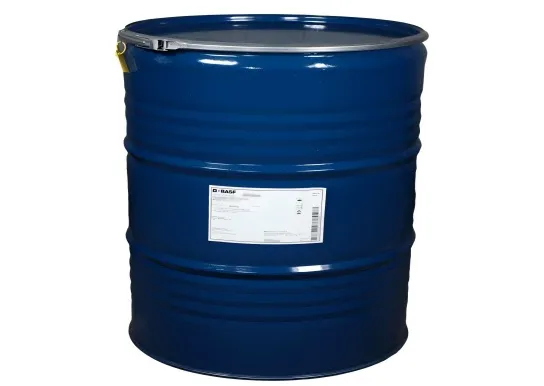
Features Of BASF Lutensit A-LBA Nonionic Surfactants
Thermal Stability – Maintains emulsification efficiency at 90°C for 8+ hours
Salt Tolerance – Stable in formulations with 25% electrolyte content
Rapid Wetting – Achieves surface tension<30 mN/m in <10 seconds
Low Foaming –<50mm foam height in high-shear applications
Eco-Profile – >90% biodegradation in 28 days (OECD 301D)
Typical Applications Of BASF Lutensit A-LBA Nonionic Surfactants
High-Temp Cleaning – Degreaser for food processing equipment sanitation
Oilfield Chemicals – Emulsifier for drilling fluid formulations
Metal Treatment – Stabilizer for phosphate conversion coatings
Textile Dyeing – Leveling agent for polyester fiber coloration
Specificaions Of BASF Lutensit A-LBA Nonionic Surfactants
| Chemical Type | Branched alkylphenol ethoxylate |
| Active Content | 70±2% |
| pH (1% Solution) | 6.0-8.0 |
| Cloud Point | 65-75°C (1% solution) |
| Viscosity (25°C) | 300-500 mPa·s |
BASF Lutensit A-LBA Nonionic Surfactants – Frequently Asked Questions (FAQ)
Q1: What is the primary chemical structure and functional mechanism of Lutensit A-LBA?
A: Lutensit A-LBA is an alkyl lactamide-based nonionic surfactant, derived from renewable fatty acids and lactamide chemistry. Its amphiphilic structure provides balanced hydrophilicity and lipophilicity, enabling effective interfacial activity, solubilization, and stabilization—particularly in polar and semi-polar systems where conventional ethoxylated surfactants may exhibit limited compatibility or stability.
Q2: In which types of formulations is Lutensit A-LBA most commonly applied?
A: It is widely used in high-performance industrial cleaning agents, metalworking fluids, agrochemical adjuvants, and specialty coatings—especially where low foaming, excellent hard water tolerance, and compatibility with cationic or amphoteric ingredients are required. Its thermal and hydrolytic stability also supports use in warm-process formulations.
Q3: How does Lutensit A-LBA compare to traditional alcohol ethoxylates in terms of environmental profile?
A: Lutensit A-LBA is formulated with bio-based raw materials and exhibits favorable ready biodegradability under standard OECD test conditions. Unlike many ethoxylated surfactants, it avoids potential concerns related to 1,4-dioxane formation and demonstrates lower aquatic toxicity in preliminary screening studies—making it a preferred option for eco-labeled industrial formulations.
Q4: Is Lutensit A-LBA compatible with common preservatives and chelating agents?
A: Yes—it shows good compatibility with typical industrial preservatives (e.g., isothiazolinones, benzisothiazolinone) and chelators such as sodium gluconate or phosphonates. No significant precipitation or viscosity instability has been observed in broad screening across pH 5–10 and typical formulation temperatures up to 60 °C.
 English
 Español
 tiếng việt
 русский