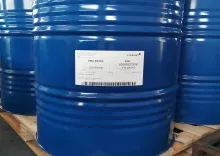
Clariant Emulsogen EL 300 LM is a versatile nonionic emulsifier tailored for emulsion polymerization and water-based coatings. It has a unique chemical structure, delivering excellent emulsification, dispersion and compatibility to enhance emulsion system stability and uniformity. It is widely used in acrylic emulsions, styrene-acrylic emulsions and water-based coatings, fitting high-solid content and high-performance application scenarios.

Powerful Emulsification: Enhances emulsion stability and uniformity, eliminating delamination and sedimentation.
High-Solid Adaptation: Optimized for high-solid content systems, improving dispersion effect.
Flexible Compatibility: Works with various resins and additives, suitable for complex formulations.
Environmental Tolerance: Resists high temperature and high shear, maintaining stable working status.
Emulsion Polymerization: Used for emulsification and stabilization of acrylic and styrene-acrylic emulsions, ensuring polymerization system uniformity.
Water-Based Coatings: Added to architectural interior wall paints and industrial equipment paints, improving emulsification and wetting effects.
Water-Based Adhesives: Aids emulsification and stabilization of woodworking adhesives and packaging adhesives, enhancing bonding strength.
Other Fields: Suitable for textile leveling agents and pesticide emulsifiable concentrates, providing efficient solutions.)
Formulation Type | - | EC, SE, EW, OD |
Product Class | - | Ethoxylated castor oil |
REACH Status | - | Exempt due to polymer status |
Cloud Point Method | - | - |
Cloud Point [°C] | °C | - |
Product Composition | - | Ethoxylated castor oil with 30 EO |
Active Content (ca.) | % | 100 |
Appearance | - | Liquid |
Water Content | % | Max. 1.0 |
HLB (Calculated) | - | 12.5 |
EPA Exemption Tolerance | - | 40 CFR § 180: 960 |
Q1: What is the primary chemical nature and HLB range of Emulsogen EL 300?
A: Emulsogen EL 300 is a nonionic emulsifier based on ethoxylated fatty alcohols. It exhibits medium to high hydrophilic-lipophilic balance (HLB), typically in the range of 12–15, making it well-suited for stabilizing oil-in-water emulsions in aqueous systems.
Q2: Is Emulsogen EL 300 compatible with ionic surfactants and common co-emulsifiers?
A: Yes, Emulsogen EL 300 demonstrates good compatibility with anionic, cationic, and amphoteric surfactants, as well as common co-emulsifiers such as fatty alcohols, glyceryl stearate, or stearic acid—enabling formulation flexibility in complex emulsion systems.
Q3: How does Emulsogen EL 300 perform under varying pH and temperature conditions?
A: As a nonionic emulsifier, Emulsogen EL 300 maintains stable performance across a broad pH range (approximately pH 3–11) and remains effective at elevated temperatures commonly encountered during emulsion processing and storage, without significant loss of emulsifying efficiency.
Q4: What are typical dosage guidelines for Emulsogen EL 300 in industrial emulsion formulations?
A: Dosage depends on formulation requirements, but Emulsogen EL 300 is typically used at low concentrations—generally ranging from 0.1% to 2% by weight of the total formulation—to achieve stable, fine-droplet emulsions in applications such as coatings, agrochemicals, and industrial cleaners.
Contact With Us:
E-mail: wangxingqiang@ericwchem.com
Have a Questions? Call Us:
Add:
Building A1, Jiete Industrial Park, Huangpu District, Guangzhou City, Guangdong Province, China
 English
 Español
 tiếng việt
 русский