English
 Español
 tiếng việt
 русский
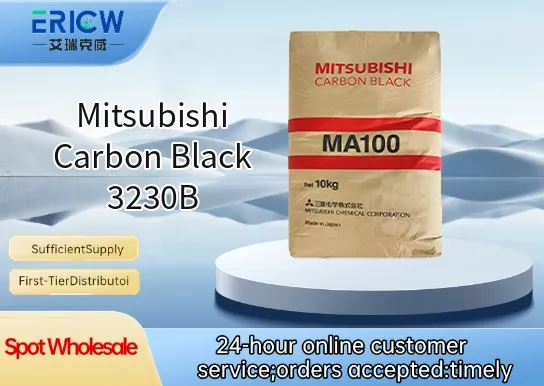
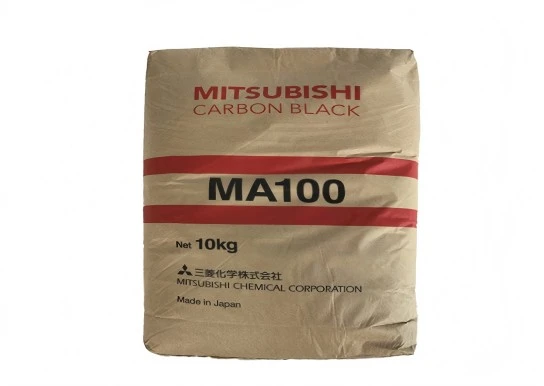
The Mitsubishi Carbon Black MA series combining controlled particle architecture with tailored surface functionality, these high-purity grades deliver consistent jetness, ranging from neutral to blue undertones, alongside superior dispersion in coatings, resins, and specialty polymers.
Acid-functionalized variants enhance compatibility with aqueous formulations, while grades with enhanced thermal resistance support ceramics and polyethylene cable insulation.
Production integrates rigorous quality control, including AMES-test validation and batch standardization, prioritizing safety and consistency.
With applications spanning high-gloss inks, battery materials, and precision-toned resins, the series balances conductivity, flow dynamics, and environmental compliance.
High purity with low ash and impurity content, ensuring stable performance
Excellent dispersion and flow properties for uniform pigmentation and smooth application
Superior blackness with blue/red undertones, offering deep color strength and tinting stability
Acidic or neutral pH variants available, compatible with diverse resin systems and environmental requirements
Enhanced durability and UV resistance for long-term performance in harsh conditions
Coatings & Paints: High-grade industrial finishes, powder coatings, and UV-resistant formulations
Inks: Newspaper, printing (offset, gravure), and toner applications with superior color consistency
Plastics & Resins: Engineering plastics, synthetic fibers, and masterbatches for enhanced mechanical properties
Specialty Uses: PE cables, ceramics, lithium battery anodes, and conductive materials
| Model | Particle Diameter (nm) | DBP Absorption (cm³/100g) Granular | Volatile Matter/Content (%) | pH Value |
| MA220 | 55 | 93 | 1.2 | 3 |
| MA14 | 40 | 67 | 1.5 | 3 |
| MA230 | 30 | 113 | 1.2 | 3 |
| MA100S | 30 | 113 | 1.2 | / |
| MA600 | 20 | 131 | 1 | 7 |
| MA7 | 24 | 66 | 2.5 | 3 |
| MA77 | 23 | 68 | 2.8 | 2.5 |
| MA600 | 20 | 131 | 2.4 | / |
| MA100 | 24 | 100 | 1.5 | 3.5 |
Q1: What is the primary functional role of Mitsubishi Carbon Black MA in polymer systems?
A: Mitsubishi Carbon Black MA is primarily used as a reinforcing and conductivity-enhancing filler in thermoplastics and elastomers. It contributes to improved mechanical strength, abrasion resistance, and static dissipation—especially in applications requiring controlled electrical properties without full insulation loss.
Q2: How does MA differ from standard rubber-grade carbon blacks like N330 or N550?
A: Unlike conventional rubber-grade carbon blacks, Mitsubishi Carbon Black MA is specially engineered for masterbatch and compound applications in engineering plastics. It features optimized particle surface chemistry and dispersion characteristics to support consistent color development and rheological behavior in high-shear compounding processes.
Q3: Is Mitsubishi Carbon Black MA suitable for food-contact or medical-grade polymer formulations?
A: Mitsubishi Carbon Black MA is not pre-qualified for direct food-contact or medical device applications. Its suitability depends on final formulation validation—including extraction testing, regulatory review, and compliance with applicable regional requirements for additives in polymeric materials.
Q4: What are typical dosage levels when using MA in polypropylene or ABS masterbatches?
A: Dosage is formulation-dependent, but Mitsubishi Carbon Black MA is typically used at low concentrations to achieve target blackness and performance—generally ranging from 0.1% to 2% by weight in final compounds. Optimal loading should be determined through dispersion trials and property evaluation.
Q5: Does MA require special drying or pre-treatment before compounding?
A: Mitsubishi Carbon Black MA is supplied in a dry, free-flowing form and does not require pre-drying under standard ambient storage conditions. However, extended exposure to high humidity may affect handling; therefore, storage in a cool, dry environment is recommended to maintain optimal dispersion performance.
Contact With Us:
E-mail: wangxingqiang@ericwchem.com
Have a Questions? Call Us:
Add:
Building A1, Jiete Industrial Park, Huangpu District, Guangzhou City, Guangdong Province, China