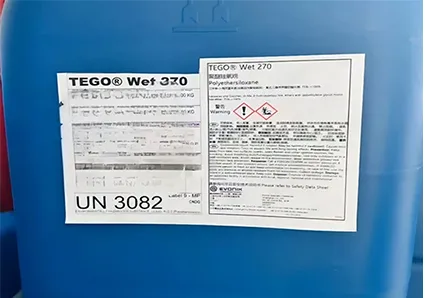
Dow Corning OFS-6403 (isobutyltriethoxysilane) is a hydrophobic silane coupling agent that enhances adhesion and waterproofing in coatings and composites. Its small molecular structure enables deep penetration into concrete and metals, forming durable siloxane crosslinks for >90% wet adhesion retention. Ideal for high-transparency concrete and anti-corrosion coatings, it complies with REACH/RoHS and reduces VOC emissions (423 g/L). Applications include waterproof coatings, FRP composites, and cable insulation
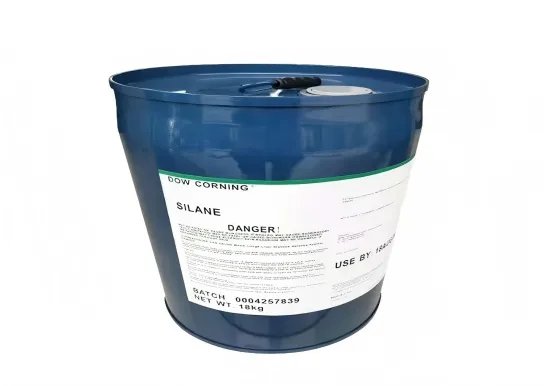
Interfacial Reinforcement - Vinyl groups copolymerize with resins; methoxy links to fillers/glass fibers, optimizing stress transfer
Process Efficiency - Low viscosity (0.56 cSt at 25°C) ensures homogeneous dispersion in formulations
Durability - Enhances UV/aging resistance in coatings (salt spray resistance >1,000 hours)
Multi-Matrix Compatibility - Works with acrylic, epoxy, and polyurethane resin
Wire Insulation - Crosslinked polyethylene cables with improved dielectric properties
FRP Composites - Glass fiber sizing for automotive/construction parts (30% strength increase)
Industrial Coatings - Metal primers with enhanced corrosion resistance
Adhesives - UV-curable formulations with 0-level adhesion (ASTM D3359)
Chemical Name | Vinyltrimethoxysilane |
Appearance | Colorless to light yellow transparent liquid |
Molecular Weight | 148.23 |
Specific Gravity (25/25℃) | 0.968 g/mL |
Boiling Point | 123℃ |
Flash Point (Closed Cup) | 22℃ |
Active Content | 99% |
Viscosity (25℃) | 0.56 cSt |
Compatible Diluents | Alcohols and water |
Packaging | 20KG/drum |
Q1: What is the primary function of OFS-6403 in formulations?
A: OFS-6403 is designed to impart durable hydrophobicity and enhance interfacial adhesion between inorganic substrates (e.g., silica, glass, or metal oxides) and organic polymer matrices, particularly in silicone- and siloxane-based systems.
Q2: In which types of applications is OFS-6403 most commonly used?
A: It is widely employed in high-performance sealants, protective coatings, hydrophobic concrete admixtures, and specialty elastomer composites where long-term water repellency and improved filler-matrix compatibility are critical.
Q3: How is OFS-6403 typically incorporated into a formulation?
A: It can be added directly during compounding—either neat or pre-diluted in a compatible solvent or carrier fluid—and is generally used at low concentrations, with dosage depending on formulation requirements and desired surface performance.
Q4: Is OFS-6403 compatible with non-silicone polymer systems?
A: While optimized for silicone and siloxane chemistries, OFS-6403 may offer limited functionality in select hybrid or modified acrylic systems; however, compatibility and performance should be verified experimentally for each specific formulation.
Contact With Us:
E-mail: wangxingqiang@ericwchem.com
Have a Questions? Call Us:
Add:
Building A1, Jiete Industrial Park, Huangpu District, Guangzhou City, Guangdong Province, China
 English
 Español
 tiếng việt
 русский