English
 Español
 tiếng việt
 русский
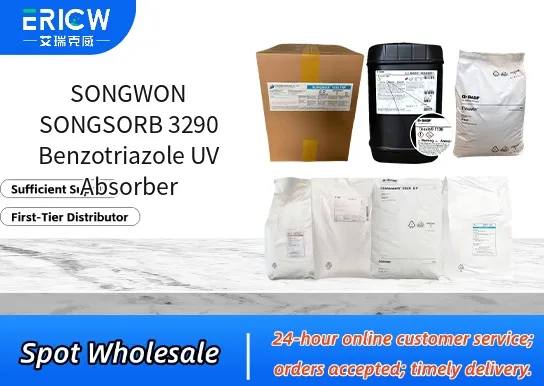
Highly effective UV absorption in the 270–380 nm range, providing robust protection against photodegradation.
Excellent compatibility with a broad range of polymers including polyolefins, ABS, PC, and PVC.
Good thermal stability up to 280 °C, supporting high-temperature processing such as extrusion and injection molding.
Low volatility and minimal migration, ensuring long-term performance retention in finished articles.
Non-discoloring formulation — maintains clarity and color fidelity in transparent and light-colored applications.
Automotive interior parts (e.g., dashboards, trim, and instrument panels).
Outdoor plastic building products (e.g., window profiles, cladding, and roofing membranes).
Consumer electronics housings requiring weather resistance and aesthetic stability.
Packaging films and containers for UV-sensitive contents (e.g., agrochemicals, cosmetics).
Coatings and inks for industrial and decorative applications exposed to sunlight.
| Chemical Type | Benzotriazole derivative |
| Product Form | Free-flowing crystalline powder |
| Appearance | Off-white to pale yellow solid |
| Melting Point | 135–140 °C |
| Solubility | Soluble in common organic solvents (e.g., chloroform, THF, ethyl acetate); insoluble in water |
| UV Absorption Max (λmax) | 310–315 nm (in ethanol) |
| Primary Applications | Stabilization of thermoplastics, coatings, adhesives and elastomers |
| Key Features | High UV screening efficiency, low volatility, excellent polymer compatibility |
Q1: What is the primary function of SONGWON SONGSORB 3290 in polymer systems?
A: SONGSORB 3290 is a benzotriazole-based ultraviolet (UV) absorber designed to protect organic materials—especially polymers—from photodegradation caused by UV radiation. It functions by absorbing harmful UV energy in the 290–400 nm range and dissipating it as low-level heat, thereby preserving color, mechanical integrity, and surface appearance over time.
Q2: Which polymer matrices is SONGSORB 3290 typically compatible with?
A: SONGSORB 3290 demonstrates good compatibility and thermal stability in a broad range of thermoplastics and thermosets, including polyolefins (e.g., PP, PE), engineering plastics (e.g., ABS, PC blends), PVC, and certain coatings and adhesives. Its performance may vary depending on resin polarity, processing temperature, and formulation additives, so compatibility testing under end-use conditions is recommended.
Q3: How does SONGSORB 3290 compare to hydroxyphenyltriazine or hindered amine light stabilizers (HALS)?
A: As a benzotriazole-type UV absorber, SONGSORB 3290 acts primarily by screening UV radiation before it initiates photochemical degradation. In contrast, HALS function via radical scavenging and regeneration cycles, offering longer-term stabilization, especially under thermal stress. SONGSORB 3290 is often used synergistically with HALS to provide complementary protection—UV absorption at the surface and radical suppression in the bulk.
Q4: What are key handling and processing considerations for SONGSORB 3290?
A: SONGSORB 3290 is supplied as a free-flowing crystalline powder with good thermal stability up to typical polymer processing temperatures. It should be handled in well-ventilated areas, avoiding inhalation of dust. For optimal dispersion, pre-blending with carrier resins or masterbatching is recommended. Processing above its melting point (~100–110 °C) facilitates uniform distribution, but prolonged exposure to excessive heat or strong oxidizing agents should be avoided.
Contact With Us:
E-mail: wangxingqiang@ericwchem.com
Have a Questions? Call Us:
Add:
Building A1, Jiete Industrial Park, Huangpu District, Guangzhou City, Guangdong Province, China