English
 Español
 tiếng việt
 русский
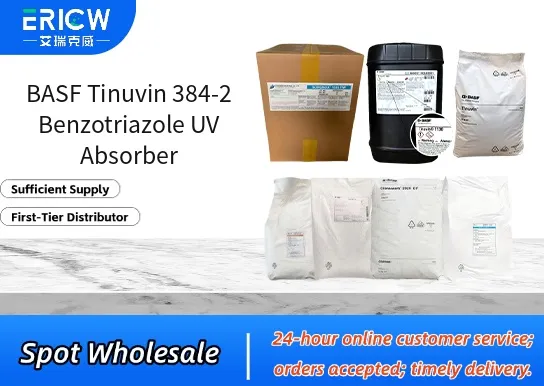
Highly effective broad-spectrum UV absorption in the 300–400 nm range.
Excellent compatibility with a wide range of polymers including polyolefins, polyesters, and engineering plastics.
Low volatility and superior thermal stability up to 250 °C during processing.
Good solubility in organic solvents and polymer melts, enabling uniform dispersion.
Non-discoloring performance with minimal impact on final product hue or clarity.
Automotive interior components (dashboards, door panels, trim).
Outdoor furniture and garden products exposed to prolonged sunlight.
Packaging films requiring long-term UV protection for contents.
Coatings for architectural and industrial applications.
Textile fibers and nonwovens used in technical and outdoor fabrics.
| Chemical Type | Benzotriazole-based UV absorber |
| Product Form | Free-flowing light yellow to pale beige granules |
| Appearance | Granular solid |
| Primary Applications | Polyolefins, polyesters, thermoplastic elastomers, coatings, adhesives |
| Key Features | Broad UV absorption, low volatility, high thermal stability |
| Benefits | Extended polymer service life, reduced photooxidation, improved color retention |
| Solubility (in typical solvents) | Soluble in chlorinated hydrocarbons, aromatic hydrocarbons, and polar aprotic solvents |
| Recommended Use Level | 0.1–0.5 wt% depending on substrate and exposure conditions |
Contact With Us:
E-mail: wangxingqiang@ericwchem.com
Have a Questions? Call Us:
Add:
Building A1, Jiete Industrial Park, Huangpu District, Guangzhou City, Guangdong Province, China