English
 Español
 tiếng việt
 русский
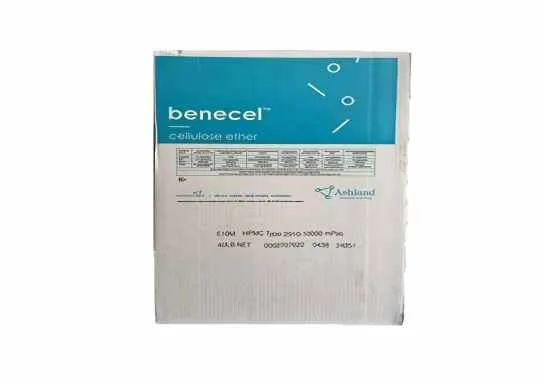
Ashland Benecel MC A4M is a high-quality high-viscosity water-soluble polymer of methylcellulose in the Benecel™ series, custom-designed for oral solid dosage forms, plant-based foods, ophthalmic formulations and daily chemical cleaning products. It has unique thermal gelation properties and excellent thickening and stabilization functions, forming flexible and dense films, suitable for precision formulation needs in multiple fields with reliable performance support.
Unique Thermal Gelation Property - Forms reversible gel in hot water, redissolves on cooling, suitable for thermal processing
Efficient Thickening & Stabilization - High-viscosity feature, excellent thickening efficiency, strongly stabilizing formulation systems
Flexible & Dense Film Formation - Excellent film-forming property, with both moisturizing and barrier functions, ensuring product performance
Easy Dissolution in Cold Water - Rapidly dissolves in cold water without agglomeration, improving formulation preparation efficiency
Pharmaceutical Formulations - Used as tablet binder, sustained-release matrix material and ophthalmic lubricating formulations
Plant-Based Foods - Used in meat alternatives and seafood analogs to impart firm meat-like texture
Daily Chemical Cleaning Products - Used in hand soaps and dishwashing liquids to improve foam stability and texture
Baked & Fried Foods - Used in fried foods to reduce oil absorption and improve shape stability
Water-Based Coating Systems - Used as rheology modifier to optimize coating leveling and storage stability
| Brand | Ashland (USA) |
| Chemical Type | Methylcellulose (MC),non-ionic cellulose ether |
| Physical Form | White to off-white free-flowing powder |
| Core Characteristics | High viscosity,Water-soluble,Thermoreversible gel,Efficient thickening |
| CAS Number | 9004-67-5 |
| Molecular Weight | 300,000-500,000 |
| Viscosity (mPa·s) | 3000-5600(2% aqueous solution, 25℃) |
| Methyl Degree of Substitution (DS) | 1.5-1.9 |
Q1: What is the primary functional role of Benecel MC A4M in aqueous formulations?
A: Benecel MC A4M functions primarily as a non-ionic, water-soluble rheology modifier and thickener. It imparts viscosity, improves suspension stability, enhances film-forming capability, and provides excellent water retention—particularly valuable in architectural coatings, tile adhesives, and cementitious systems.
Q2: How does Benecel MC A4M differ from standard hydroxyethyl cellulose (HEC) grades?
A: Benecel MC A4M is a methyl-substituted hydroxyethyl cellulose, offering improved compatibility with surfactants and enhanced resistance to enzymatic degradation compared to conventional HEC. Its modified substitution pattern also contributes to better shear-thinning behavior and more consistent viscosity performance across varying pH and electrolyte conditions.
Q3: Is Benecel MC A4M suitable for use in cement-based construction materials?
A: Yes—Benecel MC A4M is widely used in cementitious mortars, tile adhesives, and self-leveling compounds. It provides excellent water retention to support cement hydration, improves workability and open time, and helps reduce sagging on vertical surfaces without compromising final strength development.
Q4: What is the typical dosage range for Benecel MC A4M in industrial applications?
A: Dosage depends on the specific formulation and desired performance, but it is typically used at low concentrations—generally ranging from 0.1% to 2% by weight of the total formulation. Optimal levels are determined empirically based on rheological targets, substrate conditions, and compatibility with other additives.
Q5: Can Benecel MC A4M be used in combination with other thickeners or rheology modifiers?
A: Yes—it is commonly blended with associative thickeners, polyacrylates, or inorganic thickeners to fine-tune rheological profiles. Compatibility testing is recommended to ensure synergistic effects and avoid antagonism, especially in complex multi-additive systems containing surfactants or biocides.
Contact With Us:
E-mail: wangxingqiang@ericwchem.com
Have a Questions? Call Us:
Add:
Building A1, Jiete Industrial Park, Huangpu District, Guangzhou City, Guangdong Province, China