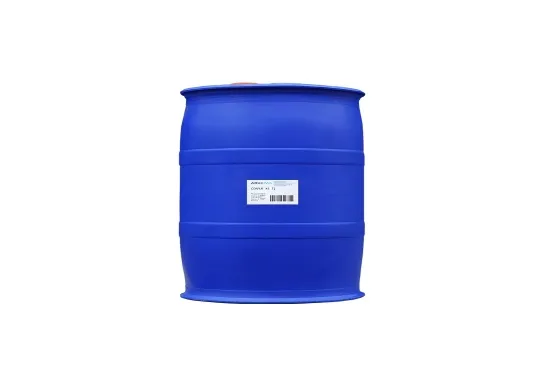
Features Of Coatex Coapur XS 71 Thickener
Full-shear thickening & wide adaptability - Efficiently increases low-medium-high shear viscosity, suitable for color matching systems
Stable color matching & excellent color development - Controls viscosity drop after adding color paste, eliminates floating
Excellent application & splatter reduction - Optimizes leveling and application feel, reduces splatter, improves efficiency
Eco-friendly compliance - Solvent-free, APEO-free, meeting zero-VOC standards
Synergistic & economical - Compatible with various thickeners, dosage 0.1%-1.5%, cost-effective
Typical Applications Of Coatex Coapur XS 71 Thickener
Full-shear thickening & wide adaptability - Efficiently increases low-medium-high shear viscosity, suitable for color matching systems
Stable color matching & excellent color development - Controls viscosity drop after adding color paste, eliminates floating
Excellent application & splatter reduction - Optimizes leveling and application feel, reduces splatter, improves efficiency
Eco-friendly compliance - Solvent-free, APEO-free, meeting zero-VOC standards
Synergistic & economical - Compatible with various thickeners, dosage 0.1%-1.5%, cost-effective
Specifications Of Coatex Coapur XS 71 Thickener
| Brand | Coatex (Arkema Group, France) |
| Chemical Type | Non-ionic water-based polyurethane |
| Appearance (20℃) | White viscous liquid |
| Active Ingredient | 17.5±1% |
| pH Value (20℃) | 7±1 |
| Specific Gravity (20℃) | 1.04±0.02 g/cm³ |
| Viscosity (25℃) | 10000 mPa.s |
| Ionic Type | Non-ionic |
| Form | Solvent-free liquid |
Coatex Coapur 830W Thickener – Frequently Asked Questions (FAQ)
Q1: What type of thickener is Coapur 830W, and what is its primary mechanism of action?
A: Coapur 830W is a water-based, associative polyurethane (HEUR) rheology modifier. It functions by forming transient physical networks between hydrophobic end groups and surfactants or polymer particles in the formulation, providing strong pseudoplastic flow behavior and excellent sag resistance.
Q2: In which types of coatings is Coapur 830W most commonly used?
A: It is widely applied in architectural waterborne paints—including interior and exterior flat to semi-gloss emulsions—as well as industrial maintenance coatings and water-based wood finishes where balanced viscosity control, spatter resistance, and brush/roller performance are critical.
Q3: How does Coapur 830W compare to cellulosic thickeners in terms of compatibility and film properties?
A: Unlike cellulosics, Coapur 830W exhibits superior compatibility with surfactants and coalescing agents, minimizes water sensitivity in dry films, and delivers better resistance to mechanical shear during application and storage. It also avoids the high water retention associated with many hydrophilic thickeners.
Q4: What is the recommended addition method for optimal performance?
A: For best results, Coapur 830W should be added during the let-down stage, after dispersants, pigments, and binders are fully incorporated. Pre-dilution with water or a compatible solvent is advised, followed by slow, high-shear mixing to ensure uniform dispersion without premature network formation.
Q5: Is Coapur 830W suitable for low-VOC or zero-VOC formulations?
A: Yes — Coapur 830W is inherently low-VOC, containing no added solvents or volatile organic carriers, making it well-suited for modern low- and zero-VOC coating systems without compromising rheological performance or stability.
 English
 Español
 tiếng việt
 русский