English
 Español
 tiếng việt
 русский
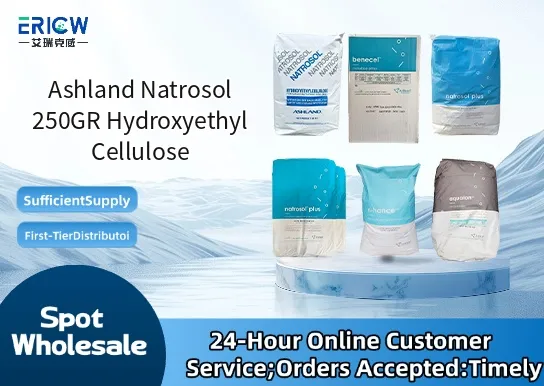
Ashland NATROSOL 250R typc is a high-quality delayed hydrolysis hydroxyethyl cellulose (HEC) aqueous thickener in the NATROSOL™ 250 series. Custom-designed for various aqueous systems such as water-based coatings, inks and daily chemicals, it is synthesized by the reaction of cellulose with ethylene oxide, featuring delayed hydrolysis regulation
Efficient Thickening Regulation - Excellent thickening efficiency, precisely controlling and enhancing system rheology
Delayed Hydrolysis Adaptation - Controllable hydrolysis rate, adapting to the timing requirements of specific production processes
Excellent Anti-Sagging Performance - Enhances system anti-sagging ability, ensuring construction and molding stability
Pigment Stabilization Enhancement - Provides pigment anti-settling and redispersibility, optimizing system uniformity
Aqueous Coatings & Inks - Used in interior and exterior emulsion paints and water-based inks to improve thickening and leveling stability
Daily Chemical Cleaning Products - Used in various aqueous cleaners to optimize viscosity and use texture
Cosmetic Formulations - Used in aqueous skin care products and personal care products to regulate texture and stability
Emulsion Polymerization Field - Low viscosity grades can be used as protective colloids for emulsion polymerization to ensure polymerization stability
| Chemical Type | Non-ionic hydrophilic hydroxyethyl cellulose derivative (HEC derivative) |
| Physical Form | White powder |
| Core Characteristics | Efficient thickening, delayed hydrolysis, anti-sagging, pigment stabilization |
| Active Content | 100 % |
| 1% Solution Appearance | Transparent |
| Solution pH Value | 6.0 - 8.5 |
| Density (25℃) | 0.55 - 0.75 g/cm³ |
| Ablation Residue | < 5.5 % |
| Moisture Content | < 5.0 % |
Q1: What is the primary functional role of NATROSOL 250R in aqueous formulations?
A: NATROSOL 250R functions primarily as a non-ionic rheology modifier and thickener. It imparts pseudoplastic flow behavior, improves suspension stability, enhances water retention, and provides excellent film-forming characteristics in water-based systems.
Q2: How does NATROSOL 250R compare to other NATROSOL grades in terms of viscosity performance?
A: NATROSOL 250R is a medium-viscosity grade designed for balanced thickening efficiency and ease of incorporation. Compared to lower-viscosity grades like 250H, it delivers higher solution viscosity at equivalent concentrations; compared to high-viscosity grades like 250HHX, it offers improved dispersion kinetics and reduced mixing energy requirements.
Q3: Is NATROSOL 250R compatible with common industrial additives such as biocides, surfactants, and electrolytes?
A: Yes, NATROSOL 250R exhibits broad compatibility with anionic and non-ionic surfactants, common isothiazolinone and benzisothiazole biocides, and moderate levels of electrolytes. Performance may vary depending on additive type and concentration, so compatibility testing under actual formulation conditions is recommended.
Q4: What are typical handling and dispersion recommendations to avoid clumping during incorporation?
A: To ensure efficient dispersion, NATROSOL 250R should be added gradually to vigorously agitated water—preferably using a high-shear mixer or dissolver. Pre-blending with inert carriers (e.g., sucrose or sodium sulfate) or dispersing in a water-miscible solvent (e.g., propylene glycol) prior to aqueous addition can further minimize agglomeration.
Q5: In which types of end-use applications is NATROSOL 250R most commonly selected?
A: NATROSOL 250R is widely used in architectural coatings, tile adhesives, cementitious mortars, personal care gels and lotions, and pharmaceutical suspensions—where reliable thickening, good sag resistance, and robust storage stability are required without significant sensitivity to pH or ionic strength.
Contact With Us:
E-mail: wangxingqiang@ericwchem.com
Have a Questions? Call Us:
Add:
Building A1, Jiete Industrial Park, Huangpu District, Guangzhou City, Guangdong Province, China