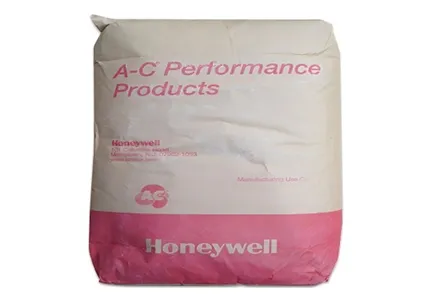
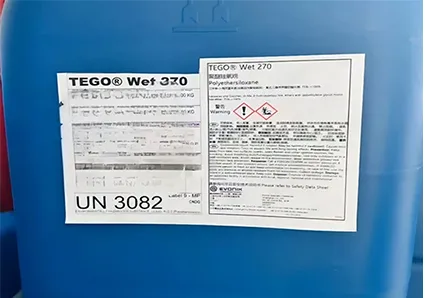
BASF Efka-3522 is a modified polysiloxane emulsion that enhances water-based coatings with superior leveling, anti-cratering, and hydrophobicity. It improves surface slip and substrate wetting while maintaining low foam stability, ideal for industrial, wood, and metal coatings with eco-compliance

Surface Enhancement: Delivers smooth finishes with improved slip and tactile feel.
Water Repellency: Boosts coating hydrophobicity for extended durability.
Defect Control: Prevents craters and ensures uniform substrate wetting.
Process Efficiency: Low foam formation for stable production.
Eco-Safety: APE-free formulation meeting environmental standards
Industrial Coatings: Optimizes leveling in water-based protective systems.
Wood Finishes: Enhances scratch resistance and surface smoothness.
Metal Coatings: Improves adhesion and corrosion protection
Chemical Name | Organically modified polysiloxane emulsion |
Appearance | Milky liquid |
Active Content | 34–36% |
Solvent | Water |
Density (20℃) | 0.97–0.99 g/cm³ |
Flash Point | >100℃ |
Packaging | 25KG/drum, 180KG/drum |
Q1: What types of coating systems is Efka-3522 most commonly used in?
A: Efka-3522 is widely applied in solventborne and high-solids industrial coatings, including automotive OEM and refinish systems, coil coatings, and general-purpose protective coatings where excellent flow, leveling, and substrate wetting are required.
Q2: How does Efka-3522 differ from conventional silicone-based leveling agents?
A: As a modified polysiloxane, Efka-3522 offers improved compatibility with a broad range of resin systems and reduced risk of surface defects such as craters or haze, compared to unmodified silicones—while still delivering strong leveling performance and low surface tension reduction.
Q3: Is Efka-3522 suitable for waterborne formulations?
A: Efka-3522 is primarily designed for solventborne and high-solids systems. While it may be incorporated into some waterborne coatings with appropriate emulsification or co-solvent assistance, its performance and stability in fully aqueous environments are not guaranteed—formulators should conduct compatibility and stability testing.
Q4: What is the typical dosage range for Efka-3522 in finished coatings?
A: Efka-3522 is typically used at low concentrations, generally ranging from 0.1% to 2.0% by weight relative to total formulation, depending on resin type, pigment loading, and desired surface appearance—optimal dosage should be determined through application-specific trials.
Q5: Does Efka-3522 affect recoatability or intercoat adhesion?
A: When used within recommended dosage levels, Efka-3522 does not significantly impair intercoat adhesion or recoatability in standard industrial coating processes. However, excessive addition may lead to surface enrichment and potential adhesion issues—proper dosing and curing conditions are essential.
Contact With Us:
E-mail: wangxingqiang@ericwchem.com
Have a Questions? Call Us:
Add:
Building A1, Jiete Industrial Park, Huangpu District, Guangzhou City, Guangdong Province, China
 English
 Español
 tiếng việt
 русский