English
 Español
 tiếng việt
 русский
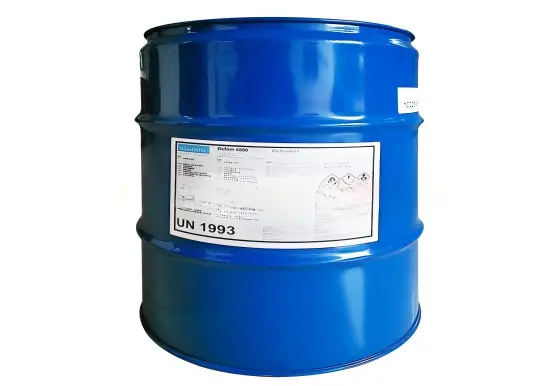
Deqian Hemings Defom Engineered for precision in both solvent-borne and water-based coating systems, integrates polysiloxane and polymer emulsion technologies to address foam challenges across diverse formulations. These defoamers utilize surface tension modulation and bubble destabilization mechanisms, ensuring rapid air release during high-shear processes like pigment milling and substrate application
Compatible with polyurethane, epoxy, and hybrid resin systems, the series minimizes microfoam entrapment while preventing surface defects such as craters or pinholes.
Defom additives adapt to varying pH levels and processing temperatures, offering sustained foam inhibition from production to end-use. Their low-VOC profiles align with regulatory standards, supporting defect-free finishes in architectural, automotive, and metal coating applications
Dual-Action Performance - Provides both defoaming and antifoaming capabilities with long-lasting stability across various formulations.
Optical Clarity Maintenance - Minimizes impact on transparency, ideal for applications requiring visual clarity.
Easy Integration - Water-dispersible formula with flexible addition points during production (recommended dosage: 0.1-1.0%).
Broad System Compatibility - Works effectively in diverse water-based systems without compromising formulation integrity.
Surface Quality Enhancement - Ensures smooth, defect-free finishes while maintaining gloss and adhesion properties.
Water-Based Coatings - Architectural and industrial coatings requiring bubble-free surfaces and consistent film formation.
Printing Inks - Prevents foam-related defects in water-based ink systems, improving print quality and consistency.
Adhesive Systems - Maintains bond strength and surface quality in water-based adhesive formulations.
Specialty Coatings - Polyurethane systems, clearcoats, and industrial finishes where surface perfection is critical.
| Model | Chemical Composition |
| Defom W-052 | Mineral oil mixture with water emulsion |
| Defom W-0506 | Mineral oil mixture with water emulsion |
| Defom W-082 | Mineral oil mixture with water emulsion |
| Defom W-086 | Mineral oil mixture with water emulsion |
| Defom8700 | Silicone-based (siloxane-polyether copolymer) |
| Defom6800 | Silicone-based (siloxane-polyether copolymer) |
| Defom2700 | Silicone-based (siloxane-polyether copolymer) |
| Defom3500 | Silicone-based (siloxane-polyether copolymer) |
| Defom5400 | Silicone-based (siloxane-polyether copolymer) |
| Defom5500 | Modified polysiloxane |
Q1: What types of industrial processes is Deqian Hemings Defom Defoamer designed for?
A: It is specifically formulated for use in water-based chemical systems where persistent foam interferes with processing efficiency—commonly applied in coatings, adhesives, textile auxiliaries, cleaning formulations, and water treatment operations.
Q2: How should this defoamer be incorporated into a formulation?
A: For optimal performance, it is recommended to add Deqian Hemings Defom Defoamer during the early or mid-stage of production—typically under moderate agitation—to ensure uniform dispersion. Pre-dilution with water or compatible solvent may improve handling in highly viscous or sensitive systems.
Q3: Is this product compatible with anionic, nonionic, and cationic surfactant systems?
A: Yes, Deqian Hemings Defom Defoamer demonstrates broad compatibility across common surfactant classes, including anionic, nonionic, and cationic systems. However, compatibility testing under actual formulation conditions is advised due to potential interactions with specific emulsifiers or stabilizers.
Q4: Does this defoamer affect the clarity or stability of final products?
A: When used within recommended dosage ranges, it typically does not compromise optical clarity or long-term physical stability in most aqueous systems. In high-solids or low-HLB formulations, slight haziness may occur—adjusting addition timing or concentration often resolves this.
Q5: What is the typical dosage range for effective foam control?
A: Dosage depends on formulation complexity and foaming severity, but it is generally effective at low concentrations—typically ranging from 0.1% to 2% by weight of the total formulation. Start with lower levels and adjust based on real-time process observation and performance requirements.
Contact With Us:
E-mail: wangxingqiang@ericwchem.com
Have a Questions? Call Us:
Add:
Building A1, Jiete Industrial Park, Huangpu District, Guangzhou City, Guangdong Province, China