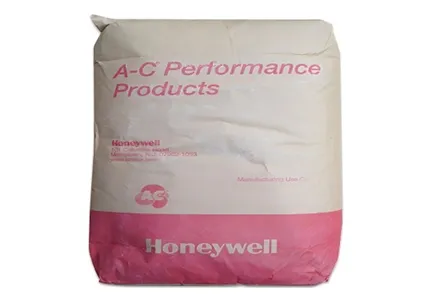
Humet dispersant for solvent automotive coatings, industrial coatings and pigment concentrates. It is especially suitable for stabilizing very fine carbon black and organic pigments, especially two-component polyurethane and baking systems. Significantly reduce the viscosity of the abrasives.

Effectively prevents floating color and blooming
Enhances the tinting strength hiding power of pigments
Improves the storage stability of coatings
chemical composition
Modified polyurethane solution
Typical materialized data
The data presented on this data page are only typical values, not technical indicators of the product.
Amine value: 11 mgkoh / g density (20° c): 1.02g / ml
Non-volatile fraction (20 min, 150 ° c): 30%
Solvent: Propylene glycol methyl ether acetate / butyl acetate 6 / 1 flash point: 38° c
Storage and transportation
Stratification or turbidity may occur at temperatures below 0 ° C, heated to 20 ° C and fully mixed.
Special attention
Surface treatment of some organic pigments has adverse effects on the effectiveness of this wetting dispersant.
In this case, the same type of untreated pigment can be tried out.
When used in coil coatings, the interaction between the cationic additives and the acid catalyst shall be considered.
Free acids or epoxy- closed acids are more applicable than amine-closed acids. This problem can be avoided by using the disperbyk-170 series.
Features and advantages
The high molecular weight aid unfloccles and stabilizes the pigment by steric hindrance.
Disperbyk 161 provides the same charge to the pigment particles.
The resulting repulsive force and position resistance stability can effectively avoid the possible common flocculation, so that the multiple pigment system will not produce floating color and flowers.
The unflocculation performance of the aid can increase the luster, color strength, transparency and covering force of the coating, while reducing the viscosity of the abrasive.
Recommended dosage
Auxiliary dosage (purchased) based on pigment:
Inorganic pigment: 10-15% titanium dioxide: 5-6%
Organic pigments: 30-90% carbon black: 70-140%
The above data are the empirical dosage, and the optimal dosage needs to be determined through a series of tests.
Add method and processing instruction
For the optimal performance, the additives should be added to the abrasive, and then the pigment.
First, the arbrasive resin and solvent components are premixed, and then the additives is slowly added under constant stirring. Pigments cannot be added until the additives are well mixed.
Q1: What is BYK 161 primarily used for in coating formulations?
A: BYK 161 is a silicone-based surface additive designed to improve substrate wetting, reduce surface tension, and enhance leveling in solventborne and high-solids coatings. It is especially effective in systems where uniform film formation and defect-free appearance are critical.
Q2: Is BYK 161 compatible with waterborne systems?
A: BYK 161 is not recommended for conventional waterborne coatings due to its solventborne nature and limited hydrophilicity. For aqueous systems, BYK offers alternative additives specifically engineered for water dispersion stability and compatibility.
Q3: How should BYK 161 be incorporated into a formulation?
A: It is typically added during the let-down or post-addition stage under moderate agitation. Pre-dilution with a compatible solvent may aid uniform dispersion. Avoid high-shear mixing after addition to prevent potential surface defects.
Q4: Does BYK 161 affect recoatability or intercoat adhesion?
A: When used within the recommended dosage range, BYK 161 generally does not impair intercoat adhesion. However, excessive dosage may lead to surface enrichment and potential adhesion issues—formulators are advised to verify compatibility and adhesion performance in their specific system.
Q5: Can BYK 161 help reduce cratering or orange peel in high-viscosity coatings?
A: Yes—by lowering dynamic surface tension and promoting uniform flow, BYK 161 contributes to improved leveling and reduced surface defects such as craters and orange peel, particularly in medium- to high-viscosity solventborne systems.
Contact With Us:
E-mail: wangxingqiang@ericwchem.com
Have a Questions? Call Us:
Add:
Building A1, Jiete Industrial Park, Huangpu District, Guangzhou City, Guangdong Province, China
 English
 Español
 tiếng việt
 русский