English
 Español
 tiếng việt
 русский
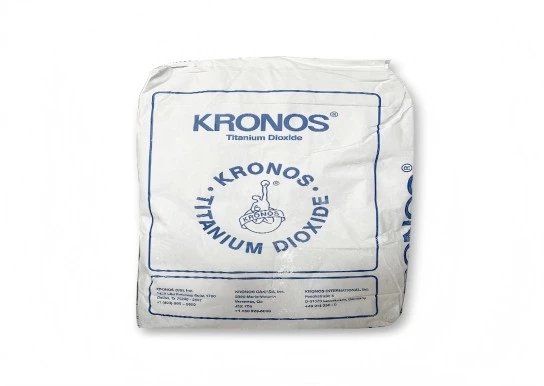
The KRONOS titanium dioxide series combines advanced rutile-grade pigments engineered for superior light-scattering efficiency and durability across industries. Utilizing optimized chloride and sulfate production processes, these pigments deliver exceptional opacity and brightness while minimizing material consumption.
Tailored surface treatments enhance dispersion stability and weather resistance.
Their controlled particle size distribution ensures optimal light refraction, enabling vibrant color development in architectural paints, automotive finishes, and industrial coatings with reduced haze and high gloss retention.
In polymer applications, the series enhances long-term weatherability and opacity for PVC, polyolefins, and engineering plastics, while specialized inorganic coatings mitigate photocatalytic degradation in harsh environments.
Premium Rutile-Grade Pigment – Produced via chloride/sulfate processes, ensuring high purity and consistent optical performance
Superior Optical Properties – Exceptional opacity, brightness (whiteness ≥96%), and tailored undertones (neutral/bluish) for vibrant coloration
Advanced Surface Treatments – Zirconium, aluminum, or polysiloxane coatings enhance weather resistance, dispersibility, and chemical stability
High Durability – Resistant to UV degradation, chalking, and harsh environments, ideal for outdoor applications
Efficient Processing – Excellent wetting and dispersion properties, compatible with water/solvent-based systems
Coatings – Architectural, automotive, and industrial paints for high coverage, gloss retention, and weather resistance
Plastics – PVC, polycarbonate, polyolefins for UV stability, whiteness, and outdoor durability
Inks & Paper – Enhances opacity and brightness in printing inks and paper products
Specialty Sectors – Cosmetics, pharmaceuticals (e.g., KRONOS 1171 for FDA/EU-compliant formulations)
| Model | Relative Density (25/25°C) | Refractive Index (20°C) | Content (GLC) | Acidity | TiO₂ Content |
| 2233 | 0.956 - 0.960 | 1.4950 - 1.4990 | ≥ 99% | ≤ 1 | ≥91.5% |
| 2310 | 0.956 - 0.960 | 1.4950 - 1.4990 | ≥ 99% | ≤ 1 | ≥92.5% |
| R-2222 | 0.956 - 0.960 | 1.4950 - 1.4990 | ≥ 99% | ≤ 1 | ≥92.5% |
Q1: What are the primary grades of KRONOS® titanium dioxide and how do they differ?
A: KRONOS® offers a range of titanium dioxide pigments tailored for specific performance requirements—including high-opacity rutile grades for demanding industrial coatings, optimized anatase variants for applications requiring strong UV reactivity (e.g., photocatalytic systems), and surface-treated grades designed for enhanced dispersion stability in water-based or solvent-based formulations. Selection depends on end-use needs such as lightfastness, chalking resistance, or rheological behavior.
Q2: Is KRONOS® titanium dioxide suitable for use in food-contact or pharmaceutical applications?
A: Certain KRONOS® titanium dioxide grades are manufactured and certified to meet purity requirements for indirect food-contact applications (e.g., in packaging inks or polymer layers), subject to regional regulatory acceptance. However, KRONOS® TiO₂ is not intended for direct addition to food or pharmaceutical dosage forms. Customers must verify compliance with applicable local regulations and consult technical documentation for grade-specific suitability.
Q3: How should KRONOS® titanium dioxide be dispersed in liquid systems?
A: Optimal dispersion typically requires high-shear mixing, often combined with appropriate wetting agents or dispersants compatible with the base medium. Pre-dispersion in a portion of the vehicle followed by gradual incorporation into the full formulation helps minimize agglomeration. Surface-treated grades generally offer improved compatibility and reduced viscosity build-up in both aqueous and organic systems.
Q4: What safety considerations apply when handling KRONOS® titanium dioxide powder?
A: As a fine particulate solid, airborne dust generation during handling should be minimized using engineering controls (e.g., local exhaust ventilation) and appropriate personal protective equipment (PPE), including respirators rated for particulates. While titanium dioxide is considered low in acute toxicity, inhalation of respirable particles over prolonged periods warrants precaution in accordance with occupational health guidelines and SDS recommendations.
Contact With Us:
E-mail: wangxingqiang@ericwchem.com
Have a Questions? Call Us:
Add:
Building A1, Jiete Industrial Park, Huangpu District, Guangzhou City, Guangdong Province, China