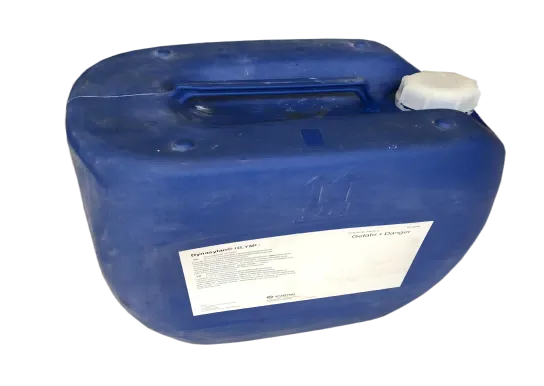
Features Of Evonik Dynasylan 1133 Silane Coupling Agent
Super Hydro/Oleophobicity - Extremely low surface energy with excellent water and oil repellency
Enhanced Durability - Forms chemically stable nanoscale coatings through cross-linking
Excellent Reactivity - Hydrolyzable ethoxy groups for strong substrate bonding
Versatile Compatibility - Effective with various inorganic materials and fluoropolymers
Long-lasting Performance - Maintains properties under harsh environmental conditions
Typical Applications Of Evonik Dynasylan 1133 Silane Coupling Agent
Automotive Glass Treatment - Water-repellent coatings for windshields and windows
Architectural Glass Coating - Easy-clean and anti-fog applications for building glazing
Surface Modification - Hydrophobic treatment for ceramics and inorganic materials
Fluoropolymer Composites - Adhesion promotion in PTFE and fluorosilicone systems
Specialty Coatings - Nano-coatings for optical and electronic components
Specifications Of Evonik Dynasylan 1133 Silane Coupling Agent
| Chemical Name | Tridecafluorooctyltriethoxysilane | - |
| Appearance | Colorless transparent liquid | Visual |
| Purity | ≥ 98.0% | GC Analysis |
| Density (25°C) | 1.25-1.35 g/cm³ | ISO 3675 |
| Refractive Index (20°C) | 1.385-1.395 | ISO 2806 |
| Flash Point | ≥ 85°C | ISO 2719 |
| Boiling Point | 205-210°C | ISO 4626 |
| Fluorine Content | ≥ 45% | Elemental Analysis |
| Solubility | Soluble in common organic solvents | - |
| Storage Stability | 12 months in sealed container | - |
Evonik Dynasylan 1189 Silane Coupling Agent – Frequently Asked Questions (FAQ)
Q1: What is the primary chemical functionality of Dynasylan 1189?
A: Dynasylan 1189 is a bifunctional silane coupling agent featuring an amino group (–NH₂) and three hydrolysable ethoxy groups (–OCH₂CH₃). The amino functionality enables strong interaction with polar substrates such as glass, metals, and fillers, while the silanol groups formed upon hydrolysis bond covalently to inorganic surfaces.
Q2: In which types of polymer systems is Dynasylan 1189 most commonly applied?
A: It is widely used in thermoset resins—including epoxy, phenolic, and polyurethane systems—as well as in filled thermoplastics and elastomers. Its amino group provides compatibility and reactivity in amine-cured epoxies, and it enhances interfacial adhesion between organic matrices and inorganic reinforcements like silica, glass fibers, or mineral fillers.
Q3: How should Dynasylan 1189 be handled and stored to maintain stability?
A: Store in tightly sealed containers under dry, cool conditions (preferably below 30 °C) and protect from moisture and direct sunlight. Due to its hydrolysable ethoxy groups, prolonged exposure to ambient humidity may lead to premature condensation. For best results, use within 12 months of opening when stored properly.
Q4: Is pre-hydrolysis required before adding Dynasylan 1189 to a formulation?
A: Pre-hydrolysis is not mandatory but can improve dispersion and coupling efficiency in aqueous or highly polar systems. In non-aqueous resin systems, it is often added directly—especially when the formulation contains trace moisture or acidic catalysts that promote in-situ hydrolysis during processing.
Q5: What is the typical dosage range for Dynasylan 1189 in composite formulations?
A: Dosage depends on the specific filler type, surface area, and matrix chemistry, but it is typically used at low concentrations—generally ranging from 0.1% to 2% by weight relative to the inorganic filler. Optimization through small-scale trials is recommended to balance performance and cost-effectiveness.
 English
 Español
 tiếng việt
 русский