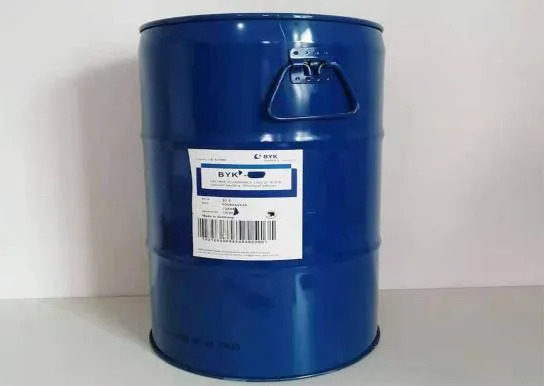
Features Of BYK-1611 Defoamer
Aromatic- and Silicone-Free: Formulated without aromatics or silicones, avoiding potential issues such as surface contamination, compatibility problems, or defects linked to these components.
Superior Foam Control: Provides excellent foam suppression along with spontaneous defoaming action, effectively addressing foam-related challenges during processing and application.
Enhances Transparency: Ensures high transparency of end products, making it suitable for applications where clarity is a critical requirement.
Reduces Pinholes: Minimizes the tendency for pinhole formation, improving surface smoothness and overall quality of formulations.
Typical Applications Of BYK-1611 Defoamer
Baking Paints: Used in baking paint applications to eliminate boiling defects and control foam, ensuring a high-quality, smooth finish after curing.
Industrial Coatings: Ideal for a range of industrial coatings, enhancing their surface integrity, performance, and aesthetic appeal for consistent, reliable results across diverse applications.
Specifications Of BYK-1611 Defoamer
Density (20 °C) | 0.90 g/ml |
Non-volatile content (60 minutes, 105 °C) | 50% |
Solvent | Xylene |
Flash point | 27 °C |
Storage and transportation | Must be stored and transported at temperatures below 40 °C |
BYK-1611 Defoamer – Frequently Asked Questions (FAQ)
Q1: What types of coating systems is BYK-1611 Defoamer best suited for?
A: BYK-1611 is especially effective in waterborne architectural and industrial coatings, including acrylic, styrene-acrylic, and vinyl acetate-based dispersions. It provides reliable foam control during both production and application without compromising gloss or film appearance.
Q2: How should BYK-1611 be incorporated into a formulation?
A: It is typically added during the let-down or post-addition stage, after high-shear dispersion of pigments and fillers. Pre-dilution with water or compatible solvent may improve uniform distribution, particularly in low-viscosity systems.
Q3: Does BYK-1611 affect substrate wetting or surface tension?
A: Unlike many silicone-based defoamers, BYK-1611 is designed to minimize interference with surface-sensitive additives. It has low surface activity and generally does not impair wetting or leveling performance when used at recommended dosage levels.
Q4: Is BYK-1611 compatible with common co-additives such as rheology modifiers and dispersants?
A: Yes — BYK-1611 demonstrates broad compatibility with associative and non-associative thickeners, polyacrylate dispersants, and common surfactants. Compatibility testing under actual formulation conditions is still recommended to confirm stability and performance.
Q5: What is the typical dosage range for BYK-1611 in waterborne coatings?
A: Dosage depends on formulation complexity and foaming tendency, but it is generally effective at low concentrations — typically ranging from 0.1% to 2.0% by weight of total formulation. Optimization via lab-scale trials is advised to balance defoaming efficiency and system stability.
 English
 Español
 tiếng việt
 русский