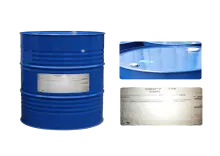
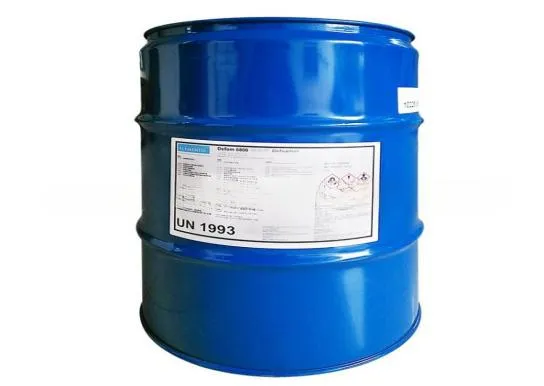
Defom™ 6500 is a silicone-based defoamer crafted for solvent-based systems, including high-solid coatings and inks. It quickly breaks and curbs foam even at minimal dosages, working efficiently in high-viscosity uses. It effectively eradicates micro-bubbles in solvent-based coatings, epoxy, polyurethane, and UV-curable coatings/inks. Solvent-free, it suits solvent-free or UV-curable formulations and performs well in high-viscosity environments, fitting paints, varnishes, inks, and industrial coatings needing strong foam control.
Silicone-based, specifically formulated for solvent-based systems like high-solid coatings and inks.
Rapidly breaks and inhibits foam, highly efficient even at very low dosages.
Excels in high-viscosity applications.
Solvent-free, enabling compatibility with solvent-free or UV-curable formulations.
Maintains performance in high-viscosity environments.
Particularly effective at eliminating micro-bubbles in relevant systems.
Suitable for solvent-based systems such as high-solid coatings and inks.
Ideal for solvent-based coatings, epoxy systems, polyurethane systems, and UV-curable coatings and inks.
Applied in solvent-based paints, varnishes, printing inks, and industrial coatings requiring robust foam control.
Chemical Composition | Silicone-based (siloxane-polyether copolymer) |
Physical Form | Liquid |
Density (g/cm³) | 0.97–0.99 |
Solvent Compatibility | Solvent-based systems, UV-curable systems |
Key Applications | Solvent-based coatings, epoxy systems, polyurethane systems, UV-curable coatings/inks, high-viscosity paints/inks. |
Advantages | Rapid foam breaking and inhibition, high efficiency at low dosages, solvent-free, suitable for micro-bubble elimination in high-viscosity formulation |
Q1: What types of industrial processes is Defom 6500 Defoamer specifically formulated for?
A: Defom 6500 Defoamer is engineered for high-shear and elevated-temperature applications commonly found in water-based coatings, architectural paints, industrial maintenance coatings, and certain adhesive formulations where persistent foam can compromise application quality and production efficiency.
Q2: How does Defom 6500 perform in systems containing surfactants or high levels of organic solvents?
A: Defom 6500 exhibits robust compatibility and defoaming efficacy in formulations with anionic, nonionic, and amphoteric surfactants, as well as moderate levels of common coalescing agents and glycol ethers—making it suitable for complex, multi-component systems without destabilizing the overall formulation.
Q3: Is Defom 6500 compatible with both acrylic and polyurethane dispersions?
A: Yes—Defom 6500 is widely used in both acrylic and aliphatic/aromatic polyurethane dispersion systems, offering reliable foam control during manufacturing, storage, and application without negatively affecting film formation, gloss, or long-term stability.
Q4: What is the recommended addition method and timing for optimal performance?
A: For best results, Defom 6500 should be added during the let-down or post-addition stage, after high-shear pigment dispersion is complete. It is typically introduced under low-to-moderate agitation to ensure uniform distribution without re-entraining air.
Q5: Does Defom 6500 affect the viscosity or appearance of finished formulations?
A: When used within the recommended dosage range, Defom 6500 has minimal impact on viscosity profile, clarity, or color development. It is designed to remain optically compatible in transparent and semi-transparent systems while maintaining rheological integrity.
Contact With Us:
E-mail: wangxingqiang@ericwchem.com
Have a Questions? Call Us:
Add:
Building A1, Jiete Industrial Park, Huangpu District, Guangzhou City, Guangdong Province, China
 English
 Español
 tiếng việt
 русский