English
 Español
 tiếng việt
 русский
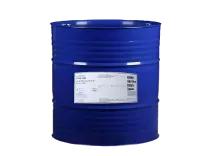
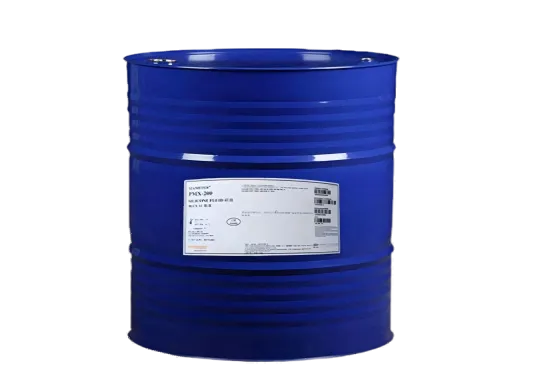
Dow Corning XIAMETER PMX 1503 is a silicone additive specifically for personal care in Dow Corning's XIAMETER series. Designed for formulas of skin care, color cosmetics, sunscreen and cleansing products, it is a customized blend of 12% ultra-high molecular weight polydimethylsiloxanol and low viscosity polydimethylsiloxane
Ultra-Low Viscosity & Easy Flow - Excellent fluidity, rapid wetting and spreading
High Thermal & Chemical Stability - Temperature and oxidation resistance, suitable for harsh working conditions
Efficient Defoaming & Antifoaming - Rapid bubble breaking, long-lasting foam inhibition
Low Surface Tension - Improved wetting and spreading performance, suitable for precision scenarios
Volatile & Residue-Free - Rapid volatilization at room temperature, clean surface without residue
Industrial Lubrication - Low-friction long-lasting lubrication for precision mechanical parts
Efficient Defoaming - Rapid defoaming in chemical, coating and daily chemical systems
Electronic Cleaning - Residue-free cleaning and protection for precision electronic components
Personal Care Raw Material - Skin feel and spreading optimization for cosmetics and toiletries
Release Assistance - Efficient release for rubber and plastic molding, improving production efficiency
| Brand | Dow |
| Chemical Composition | Hexamethyldisiloxane (≥ 89.0 %) |
| INCI Name | Hexamethyldisiloxane |
| Appearance | Colorless transparent liquid |
| Viscosity (25℃) | 0.65 mm²/s |
| Flash Point (Closed Cup) | -1 ℃ |
| Specific Gravity (25℃) | 0.65 - 0.67 |
| Refractive Index (25℃) | 1.373 - 1.375 |
| Surface Tension (25℃) | 15.9 mN/m |
Q1: What is the primary function of XIAMETER PMX 1503 in formulations?
A: XIAMETER PMX 1503 is a low-viscosity, reactive silicone fluid designed primarily as a surface modifier and release aid. It imparts slip, mar resistance, and improved substrate wetting in coatings, inks, adhesives, and sealants—without significantly affecting cure chemistry or film integrity.
Q2: Is PMX 1503 compatible with common polymer systems such as acrylics, polyurethanes, and epoxies?
A: Yes, PMX 1503 exhibits broad compatibility with thermoset and thermoplastic resin systems, including acrylics, polyurethanes, and epoxy-based formulations. Its reactive silane functionality allows for covalent integration into many crosslinking networks, enhancing permanence of surface effects.
Q3: How should PMX 1503 be incorporated into a formulation to ensure optimal performance?
A: It is typically added during the let-down or post-additive stage under moderate agitation. Pre-dilution in a compatible solvent or carrier resin may improve dispersion. Avoid high-shear mixing that could prematurely hydrolyze the alkoxy silane groups, and allow sufficient time for surface migration prior to curing.
Q4: Does PMX 1503 require heat or catalysts to react in typical coating applications?
A: The alkoxy silane functionality in PMX 1503 undergoes moisture-catalyzed condensation at ambient conditions, though reaction rate increases with temperature and humidity. In thermally cured systems, it readily integrates during standard bake cycles without requiring additional catalysts.
Contact With Us:
E-mail: wangxingqiang@ericwchem.com
Have a Questions? Call Us:
Add:
Building A1, Jiete Industrial Park, Huangpu District, Guangzhou City, Guangdong Province, China