English
 Español
 tiếng việt
 русский
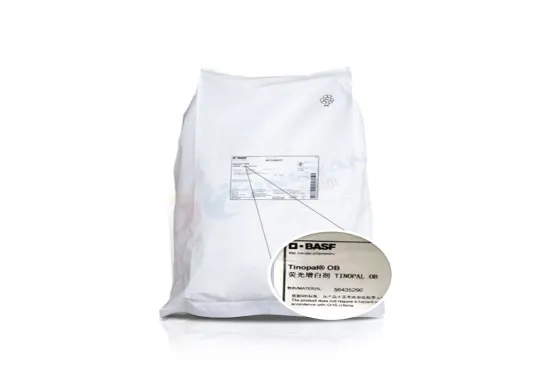
BASF (formerly Ciba) Irgastat P18 is an antistatic agent. With a series of excellent physical and chemical properties. Its performance advantages make it suitable for a wide range of applications.
Color & transparency: Colorless for pigment compatibility; high transparency suitable for films and transparent household products
Safety: Non-sparking, no grounding required, boosts usage safety
Cleanliness: Dust and particle-free, ideal for clean-type household products
Long-term performance: Durable effectiveness, exceeding the service life of high-value products
Environmental adaptability: Humidity-independent, maintains performance in harsh conditions
Non-migration: No packaging contamination or printing issues, preserves product quality in packaging and printing
Rapid action: Fast conductive network formation, no impact on material properties
Films: Imparts antistatic properties to various film products
Transparent home goods: For manufacturing transparent household items (e.g., transparent containers, glass-like home products)
Clean home products: Applied to clean-environment required items (e.g., kitchen utensils, bathroom supplies)
Surface Resistance | ASTM T257 | 8×10⁷ |
Volume Resistivity [Ohm x cm] | ASTM T257 | 3×10⁸ |
Electrostatic Decay Time [sec] | MIL B - 81705 | <0.02 |
Refractive Index [22℃] | - | 1.501 |
Melting Point [℃] | - | 176 |
Water Absorption [%]@23℃ - in water | ASTM D3418 | 5 |
Melt Index [g/10min] | 230℃/2.16kg | 17 - 21 |
Q1: What types of polymers is Irgastat P-18 compatible with?
A: Irgastat P-18 is primarily designed for use in polyolefins such as polypropylene (PP) and polyethylene (PE), including both homopolymers and copolymers. It demonstrates good compatibility and dispersion in these non-polar matrices and is also suitable for certain engineering thermoplastics where surface resistivity reduction is required.
Q2: How does Irgastat P-18 achieve its antistatic effect?
A: Irgastat P-18 functions as an internal antistatic agent by migrating to the polymer surface during processing and service life. Its amphiphilic molecular structure enables it to attract ambient moisture, forming a conductive layer that dissipates static charges effectively without compromising bulk insulation properties.
Q3: Is Irgastat P-18 suitable for applications requiring regulatory compliance for food contact or medical devices?
A: Irgastat P-18 is not intended for direct food-contact applications unless specifically authorized under applicable regional regulations. It has not been evaluated for use in medical devices or pharmaceutical packaging. Customers must verify suitability against their target market’s regulatory requirements and perform necessary testing before commercial use.
Q4: What is the typical dosage range for effective antistatic performance?
A: Effective dosage generally ranges from 0.1% to 2% by weight, depending on the base polymer, processing conditions, desired surface resistivity level, and environmental humidity. Lower concentrations are often sufficient in thin-walled parts or high-humidity environments, while higher loadings may be needed for thick sections or low-humidity operation.
Q5: Does Irgastat P-18 affect the mechanical or optical properties of the final part?
A: When used within recommended dosage levels, Irgastat P-18 typically has minimal impact on tensile strength, impact resistance, or thermal stability. Some slight surface tackiness may occur at higher loadings, and very high concentrations could potentially influence clarity in transparent polyolefin applications—therefore, optimization through application testing is advised.
Contact With Us:
E-mail: wangxingqiang@ericwchem.com
Have a Questions? Call Us:
Add:
Building A1, Jiete Industrial Park, Huangpu District, Guangzhou City, Guangdong Province, China