English
 Español
 tiếng việt
 русский
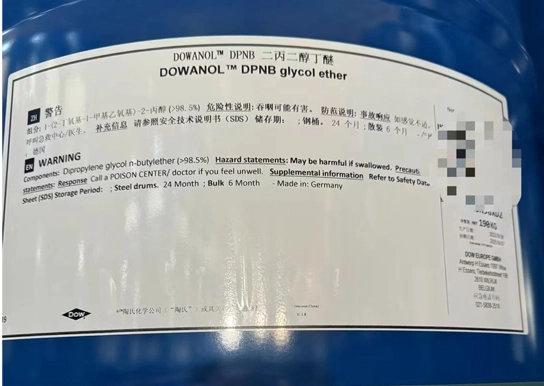
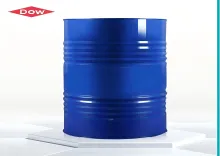
Dow Diethylene Glycol Butyl Ether Acetate (DBA) is a high-quality product in Dow's high-boiling glycol ether ester solvent series. Designed for industrial systems such as high-temperature baking enamels and printing inks, it is a high-performance high-boiling solvent with excellent solubility, compatibility and coalescent-aiding properties
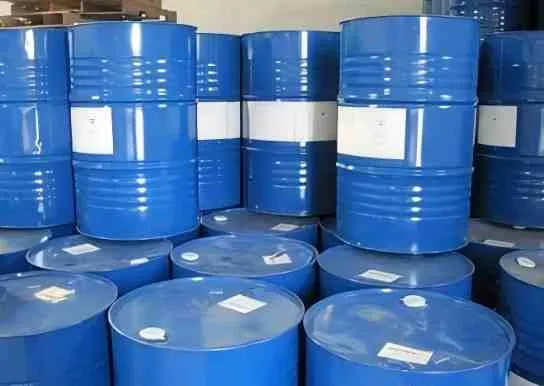
Ultra-High Boiling Point & Stability - High boiling point feature, extremely slow volatilization rate, adapting to high-temperature processing conditions
Efficient Solubility & Compatibility - Miscible with most organic solvents, wide dissolution range and strong formula adaptability
Excellent Coalescent-Aiding Property - Improves film formation integrity of emulsion paint systems and optimizes film density
Low Odor & Safe Adaptation - With slight pleasant aroma, low irritation, and more friendly operating environment
Printing Ink Manufacturing - As solvent for stamp pad inks and screen printing inks, ensuring printing fluency and pattern stability
Industrial Cleaning Scenarios - Used in metal detergents, paint removers and automotive engine cleaners, enhancing oil stain dissolution capacity
Resin Processing Systems - As solvent for epoxy resins, optimizing resin dissolution processing and molding effect
Fine Chemical Extraction - Used as drug extractant, ensuring extraction efficiency and target component purity
| Brand | Dow (USA) |
| Chemical Name | Diethylene glycol monobutyl ether; 2-(2-Butoxyethoxy)ethanol |
| English Alias | Butyl Carbitol™ |
| CAS No. | 112-34-5 |
| Molecular Formula | C₈H₁₈O₃ |
| Molecular Weight | 162.2 |
| Physical Form | Colorless transparent liquid, slightly ethereal odor |
| Purity | ≥ 99 % |
Q1: What is the primary function of DBA in coating and ink formulations?
A: DBA functions primarily as an active coalescing agent and solvency enhancer, helping to promote film formation in waterborne systems while improving flow, leveling, and substrate wetting.
Q2: Is DBA compatible with common waterborne polymer systems such as acrylics and styrene-acrylics?
A: Yes, DBA demonstrates broad compatibility with a wide range of waterborne latexes and dispersions, including acrylic, styrene-acrylic, and vinyl acetate-based polymers, supporting stable formulation without phase separation or viscosity instability.
Q3: How does DBA compare to other glycol ether acetates in terms of evaporation rate and odor profile?
A: DBA offers a balanced evaporation rate—slower than ethyl acetate but faster than higher-boiling glycol ether acetates—making it suitable for controlled film formation. It also exhibits a milder, less pungent odor relative to many traditional coalescents.
Q4: Can DBA be used in low-VOC or zero-VOC compliant formulations?
A: Yes, DBA has a relatively low vapor pressure and contributes favorably to VOC reduction strategies when used as a replacement for higher-VOC solvents, supporting compliance with evolving regional VOC regulations for architectural and industrial coatings.
Contact With Us:
E-mail: wangxingqiang@ericwchem.com
Have a Questions? Call Us:
Add:
Building A1, Jiete Industrial Park, Huangpu District, Guangzhou City, Guangdong Province, China