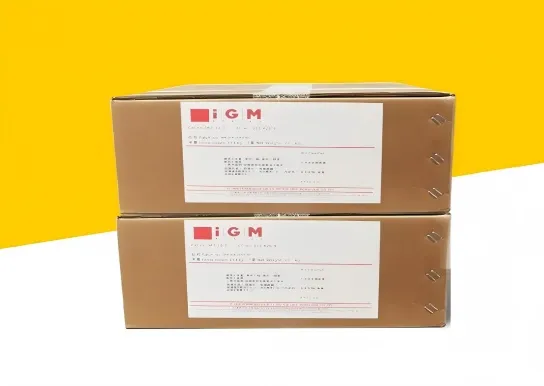
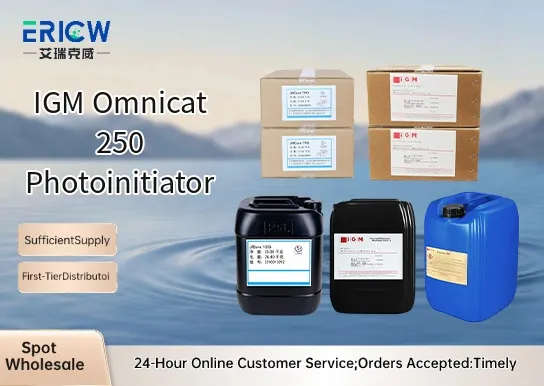
Features Of IGM Omnirad 907FF UV Photoinitiator
High-efficiency Type I initiation - Alpha-amino ketone structure, high initiation efficiency, fast and uniform surface and deep curing effect
Fine-grinding advantage - Uniform and fine powder particle size, excellent dispersibility, easy to integrate into various formulations, avoiding agglomeration
High purity and low impurities - High purity and low volatile content, no residual odor after curing, suitable for high-demand curing scenarios
Broad-spectrum compatibility - Suitable for acrylate and unsaturated polyester systems, compatible with solvent-based and water-based UV formulations
Good compounding synergism - Can be compounded with thioxanthone photoinitiators to enhance light absorption capacity and optimize curing performance
Typical Applications Of IGM Omnirad 907FF UV Photoinitiator
High-efficiency Type I initiation - Alpha-amino ketone structure, high initiation efficiency, fast and uniform surface and deep curing effect
Fine-grinding advantage - Uniform and fine powder particle size, excellent dispersibility, easy to integrate into various formulations, avoiding agglomeration
High purity and low impurities - High purity and low volatile content, no residual odor after curing, suitable for high-demand curing scenarios
Broad-spectrum compatibility - Suitable for acrylate and unsaturated polyester systems, compatible with solvent-based and water-based UV formulations
Good compounding synergism - Can be compounded with thioxanthone photoinitiators to enhance light absorption capacity and optimize curing performance
Specifications Of IGM Omnirad 907FF UV Photoinitiator
| Brand & Series | IGM (Omnirad® series) |
| Chemical Type | Alpha-amino ketone Type I free radical UV photoinitiator |
| Chemical Composition | 2-Methyl-1-[4-(methylthio)phenyl]-2-morpholinopropan-1-one |
| CAS No | 71868-10-5 |
| Molecular Formula | C15H21NO2S |
| Appearance (25°C) | White fine crystalline powder |
| Purity | ≥99.0% |
| Molecular Weight | 279.40 g/mol |
| Melting Point | 72-75°C |
IGM Omnirad 907FF UV Photoinitiator – Frequently Asked Questions (FAQ)
Q1: What is the primary function of Omnirad 907FF in UV-curable formulations?
A: Omnirad 907FF is a Type I photoinitiator that undergoes efficient cleavage upon exposure to UV light—particularly in the UVA range—to generate reactive free radicals. It is primarily used to initiate rapid polymerization of acrylate-based monomers and oligomers in coatings, inks, and adhesives.
Q2: How does Omnirad 907FF compare to other benzyl dimethyl ketal initiators in terms of reactivity and yellowing tendency?
A: Omnirad 907FF offers high initiation efficiency and low volatility, with reduced post-cure yellowing compared to earlier-generation benzyl dimethyl ketals. Its molecular structure contributes to improved photostability and lower residual odor, making it suitable for demanding decorative and clear-coat applications.
Q3: Is Omnirad 907FF compatible with pigmented or filled UV systems?
A: Yes—it demonstrates good compatibility in moderately pigmented formulations, including white and pastel shades. However, performance may vary with high pigment loadings or strongly absorbing pigments (e.g., certain iron oxides or carbon black), so formulation optimization and lamp spectrum matching are recommended.
Q4: What is the typical dosage range for Omnirad 907FF in standard UV-curable coatings?
A: Dosage depends on formulation requirements, film thickness, and UV source intensity, but it is typically used at low concentrations—generally ranging from 0.1% to 2% by weight relative to total formulation solids. Optimization through small-scale cure trials is advised to balance surface cure, through-cure, and final properties.
Q5: Does Omnirad 907FF require thermal activation or post-bake treatment?
A: No—Omnirad 907FF is designed for purely photochemical initiation under ambient conditions. It does not require thermal co-activation and achieves full reactivity with appropriate UV exposure, supporting true cold-cure processing.
 English
 Español
 tiếng việt
 русский