Shin-Etsu KBM-6803 is an ethylenediamine-structure silane coupling agent that significantly enhances polymer-filler interfacial properties. This amino-functional formulation delivers superior hydrophobicity and flexibility while improving adhesion in challenging environments. Its unique molecular architecture provides exceptional alkali and water resistance, making it ideal for demanding composite applications requiring durable performance.
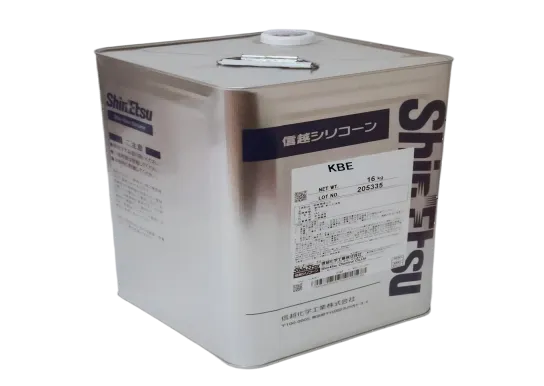
Interfacial Reinforcement - Strong filler-matrix bonding
Environmental Resistance - Excellent alkali/water protection
Flexibility Enhancement - Maintains material elasticity
Multi-Polymer Compatibility - Effective across various resin systems
Process Stability - Consistent performance in curing processes
Epoxy Composites - High-strength structural materials
Acrylic Coatings - Weather-resistant protective layers
Polycarbonate Blends - Impact-modified formulations
Electronic Encapsulants - Moisture-resistant potting compounds
Automotive Adhesives - Durable bonding solutions
Chemical Name | γ-Aminopropyltriethoxysilane |
Molecular Formula | NH₂(CH₂)₃Si(OC₂H₅)₃ |
Molecular Weight | 221.4 |
Appearance | Colorless Transparent Liquid |
Flash Point | 96℃ - 103℃ |
Density (25℃) | 0.940 - 0.946 |
Refractive Index (25℃) | 1.414 - 1.421 |
Boiling Point | 217℃ |
CAS Number | 919 - 30 - 2 |
Q1: What is the primary functional group chemistry of KBM-6803?
A: KBM-6803 is a bifunctional silane coupling agent featuring an epoxy functional group (oxiranyl) and three hydrolyzable methoxy groups. This structure enables covalent bonding to both inorganic substrates (e.g., glass, silica, metals) via silanol formation and organic polymers (e.g., epoxies, polyurethanes, acrylics) through ring-opening or nucleophilic addition reactions.
Q2: In which types of polymer systems is KBM-6803 most commonly applied?
A: KBM-6803 is widely used in epoxy, phenolic, and polyurethane formulations—particularly where enhanced adhesion to fillers (e.g., silica, calcium carbonate) or reinforcement fibers (e.g., glass, basalt) is required. It is also employed in coatings and encapsulants demanding improved moisture resistance and interfacial durability.
Q3: How should KBM-6803 be handled and stored to maintain stability?
A: KBM-6803 should be stored in tightly sealed containers under dry, cool conditions (preferably below 30°C) and protected from moisture and direct sunlight. Due to its hydrolyzable methoxy groups, prolonged exposure to ambient humidity may lead to premature condensation and reduced efficacy. Always use dry handling equipment and avoid contact with water prior to formulation.
Q4: Is KBM-6803 compatible with aqueous systems?
A: KBM-6803 is not inherently water-stable and requires careful pre-hydrolysis—typically in a controlled alcohol/water mixture with mild acid catalysis—to generate reactive silanols before introduction into aqueous dispersions or emulsions. Direct addition to water without stabilization will result in rapid phase separation or gelation.
Q5: What is the typical dosage range for KBM-6803 in filled polymer systems?
A: Dosage generally ranges from 0.1% to 2% by weight relative to the inorganic filler or substrate surface area. Optimal loading depends on specific filler type, surface area, moisture content, and matrix chemistry—empirical optimization is recommended for each application.
Contact With Us:
E-mail: wangxingqiang@ericwchem.com
Have a Questions? Call Us:
Add:
Building A1, Jiete Industrial Park, Huangpu District, Guangzhou City, Guangdong Province, China
 English
 Español
 tiếng việt
 русский