English
 Español
 tiếng việt
 русский
BASF LAROSTAT 264A is one of the most widely used cationic antistatic agents globally. It is an alkyl dimethyl ethyl ammonium sulfate quaternary ammonium salt and a halogen - free antistatic agent. With features like low resistance and long - lasting antistatic performance, it surpasses traditional antistatic agents in effectiveness. It is free from typical problems of chloride quaternary ammonium, has wide temperature adaptability, and has FDA approval. It can be used for both internal addition and topical coating applications.
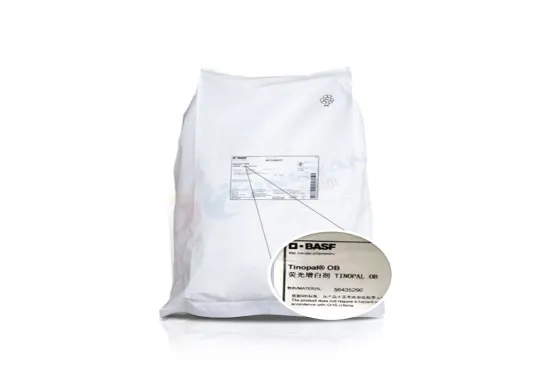
High-performance antistatic: Low resistance for fast static dissipation, long-lasting effect to ensure product safety and performance.
Halogen-free: Eco-friendly, lower potential safety risks than traditional antistatic agents.
Wide adaptability: Stable performance across temperature ranges, suitable for internal and topical use.
Regulatory compliant: FDA-approved, meets strict safety and quality standards for regulated applications.
Plastics industry: Polyurethane, polystyrene, rigid PVC, etc., for static elimination and product performance improvement.
Textile field: Dust control in production and use, ensuring textile cleanliness and quality.
Others: Fiberglass, floor finishes and other general applications requiring antistatic treatment.
Model | LAROSTAT 264A |
Type | Quat (Quaternary ammonium salt) |
Water Solubility | Soluble (Y) |
Concentration | 35 |
Application Method | Suitable for internal addition and topical coating (both marked as X) |
Product Form | Liquid |
Approvals | FDA approval, suitable for a wide range of applications |
Key Features | Low resistance, long - lasting antistatic, halogen - free |
Application Industry | Plastic application, textile, fiberglass, etc. |
Q1: What is the primary mechanism of action for LAROSTAT 264A in polyolefin applications?
A: LAROSTAT 264A functions as an internal antistatic agent by migrating to the polymer surface during processing and service life, where it absorbs ambient moisture to form a conductive layer that dissipates static charges. Its compatibility with polyolefins enables effective blooming without compromising mechanical properties.
Q2: Is LAROSTAT 264A suitable for use in food-contact polypropylene packaging?
A: LAROSTAT 264A is designed for use in polymers intended for non-direct food contact applications. For food-contact scenarios, regulatory compliance must be verified case-by-case with the final formulation, processing conditions, and applicable regional requirements—BASF recommends consulting official documentation and conducting appropriate migration testing.
Q3: How does processing temperature affect the performance and stability of LAROSTAT 264A?
A: LAROSTAT 264A exhibits good thermal stability during standard polyolefin processing (e.g., extrusion, injection molding). It remains effective across typical melt temperature ranges and shows minimal degradation or volatilization under recommended processing conditions.
Q4: Can LAROSTAT 264A be used alongside common polymer additives such as antioxidants or UV stabilizers?
A: Yes, LAROSTAT 264A is generally compatible with widely used polymer additives including hindered phenol antioxidants and HALS-type UV stabilizers. However, additive interactions should be evaluated empirically in the target formulation to ensure no antagonistic effects on antistatic performance or long-term stability.
Q5: What is the typical dosage range for achieving effective antistatic performance in PP or HDPE?
A: Effective antistatic performance is typically achieved at low concentrations, generally ranging from 0.1% to 2% by weight, depending on the base polymer, processing method, required surface resistivity level, and environmental humidity conditions.
Contact With Us:
E-mail: wangxingqiang@ericwchem.com
Have a Questions? Call Us:
Add:
Building A1, Jiete Industrial Park, Huangpu District, Guangzhou City, Guangdong Province, China