English
 Español
 tiếng việt
 русский
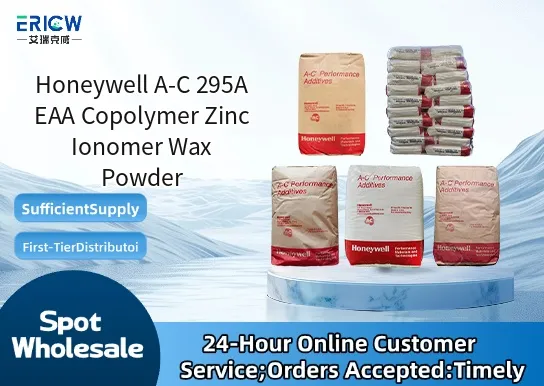
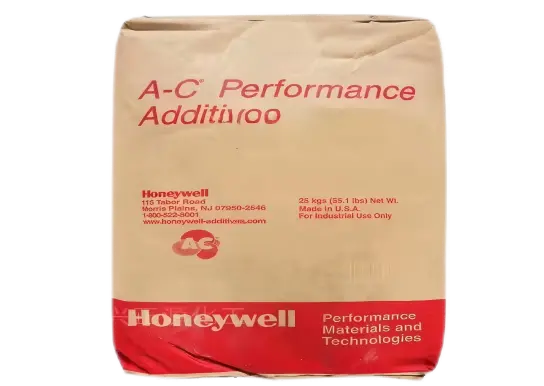
Honeywell Polyethylene LDPE Wax Powder A-C series offers specialized polyethylene waxes combining tailored molecular architectures with advanced surface-modification capabilities. These low molecular weight polymers enhance rheological control across coatings, inks, and adhesives while optimizing slip resistance, scratch durability, and thermal stability.
Their amphiphilic nature enables dual functionality in solvent-based and aqueous systems, improving dispersion in textile treatments and reducing COF in PVC processing.
Key applications span industrial coatings, hot-melt adhesives, and plastic modification, where they act as nucleating agents, viscosity modifiers, and lubricants. FDA-compliant grades support food-contact packaging, while their role in candle formulations improves crystalline.
Surface Enhancement: Improves gloss, smoothness and scratch resistance
Processing Aid: Enhances flow characteristics and mold release properties
Dispersion Improvement: Optimizes pigment and filler distribution
Multi-functional Performance: Acts as lubricant, nucleating agent and viscosity modifier
Regulatory Compliance: Meets FDA standards for food contact applications
Plastic Processing: Used in extrusion, injection molding and film production
Coating Systems: Enhances surface properties in solvent-based formulations
Ink Manufacturing: Improves print quality and abrasion resistance
Industrial Applications: Suitable for rubber, textiles and specialty wax products
| Model | Chemical Type | Appearance | Melting Point (°C) | Viscosity (140℃) |
| A-C 9 | Low-Density Polyethylene (LDPE) Wax | White Powder | 105 | 350 cps |
| A-C 9A | Low-Density Polyethylene (LDPE) | Granular | 105 | / |
| A-C 8 | Low-Density Polyethylene (LDPE) Wax | White Powder | 105 | 375 cps |
| A-C 8A | Medium-Density Polyethylene Homopolymer | White Powder | 105 | 375 cps |
| A-C 6 | Low Molecular Weight Polyethylene Wax | White granules or powder | 106 | 375 cps |
| A-C 617 | Low-Density Polyethylene (LDPE) Wax Powder | White Powder | 108 | 375 cps |
| A-C 617A | Low Molecular Weight Polyethylene Wax | White powder or granules | / | 180 cps |
| A-C 3A | Low-Density Polyethylene (LDPE) Homopolymer | White Powder | 105-115 | / |
| A-C 680A | LDPE Homopolymer Wax Powder | White Powder | 105-115 | / |
| A-C 16 | Low-Density Polyethylene (LDPE) Homopolymer | Granular | 101 | 200 mPa.s |
Q1: What is the primary functional role of A-C® wax powder in polymer and coating formulations?
A: A-C® wax powder functions primarily as a processing aid and surface modifier—improving melt flow, reducing extrusion torque, enhancing dispersion stability, and imparting controlled matting, slip, and abrasion resistance in final products.
Q2: How does A-C® wax powder differ from HDPE or PTFE-based waxes in performance applications?
A: As a low-density polyethylene (LDPE)-based wax, A-C® offers a lower melting point and greater compatibility with polar and non-polar resins compared to HDPE waxes, while providing better thermal stability and broader formulation flexibility than PTFE waxes—without fluorinated chemistry constraints.
Q3: Is A-C® wax powder suitable for use in food-contact compliant coatings or inks?
A: A-C® wax powder is widely used in industrial coatings and inks where food-contact compliance is required; however, final regulatory acceptance depends on the full formulation, processing conditions, and applicable regional regulations—formulators should conduct appropriate migration testing and consult current regulatory guidance for their specific application.
Q4: What are typical handling and storage recommendations to maintain product integrity?
A: Store in a cool, dry location away from direct sunlight and heat sources. Keep containers tightly sealed to prevent moisture absorption and avoid exposure to static-prone environments during handling, as fine wax powders may generate electrostatic charge during transfer.
Contact With Us:
E-mail: wangxingqiang@ericwchem.com
Have a Questions? Call Us:
Add:
Building A1, Jiete Industrial Park, Huangpu District, Guangzhou City, Guangdong Province, China