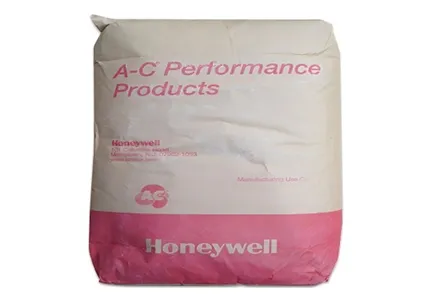
Clariant Emulsogen ENF is a nonionic emulsifier based on fatty alcohol ethoxylate, specifically engineered for high-solid emulsion polymerization and coating formulations. Its APEO-free chemistry enhances wetting and leveling in waterborne systems while stabilizing acrylic/styrene-acrylic emulsions. The solvent-free design ensures compatibility with resins and pigments, ideal for demanding industrial applications

UV Filter Synergy - Enhances stability of chemical UV absorbers like Ethylhexyl Triazone
Low-Viscosity Adaptability - Ideal for sprayable formulations and pumpable lotions
Sensory Enhancement - Delivers lightweight texture with quick absorption
Cold Process Ready - Eliminates heating steps for energy-efficient production
Eco-Certified - RSPO MB (palm-based), EWG score 2, and ISO 16128 compliant
Sun Care - SPF emulsions with improved UV filter dispersion (e.g., Eclipsogen DHBT blends)
Hair Styling - Low-residue emulsifier for heat-protectant sprays
Wet Wipes - Stabilizes oil-soluble actives in pre-moistened towelettes
Color Cosmetics - Foundation emulsions with enhanced pigment wetting
Biodegradable Cleaners - Palm-based emulsifier for eco-detergents
| INCI Name | Trilaureth-4 Phosphate |
| Active Content | 90–100% |
| HLB Value | 12 (O/W system) |
| Appearance | Clear liquid |
| Renewable Content | 60% RCI |
| Storage Stability | 24 months |
Q1: What is the primary function of Emulsogen ENF in formulations?
A: Emulsogen ENF is a nonionic emulsifier designed to stabilize oil-in-water emulsions, enhance solubilization of hydrophobic actives, and improve the physical stability and homogeneity of aqueous-based systems—particularly in personal care, home care, and industrial cleaning applications.
Q2: Is Emulsogen ENF compatible with ionic surfactants and common formulation ingredients?
A: Yes, as a nonionic surfactant, Emulsogen ENF exhibits broad compatibility with anionic, cationic, and amphoteric surfactants, as well as common thickeners, preservatives, and active ingredients. It is generally stable across a wide pH range and tolerant of moderate electrolyte levels.
Q3: How should Emulsogen ENF be incorporated into a formulation?
A: It is typically added during the aqueous phase or directly into the oil phase depending on the emulsification method (e.g., PIT or high-shear). Pre-dilution in water or co-solvent may facilitate uniform dispersion. Processing temperature should remain below its cloud point for optimal performance.
Q4: What are typical dosage levels for Emulsogen ENF?
A: Dosage depends on formulation requirements, but it is generally used at low concentrations—typically ranging from 0.1% to 2% by weight—sufficient to achieve desired emulsion stability and clarity without compromising sensory or functional properties.
Q5: Does Emulsogen ENF have any known limitations in high-temperature or high-salt environments?
A: As a nonionic ethoxylated surfactant, its cloud point defines the upper temperature limit for aqueous solubility. Performance may decrease near or above this point. High electrolyte concentrations can also reduce solubilization capacity and emulsion stability, so formulation optimization is recommended under such conditions.
Contact With Us:
E-mail: wangxingqiang@ericwchem.com
Have a Questions? Call Us:
Add:
Building A1, Jiete Industrial Park, Huangpu District, Guangzhou City, Guangdong Province, China
 English
 Español
 tiếng việt
 русский