English
 Español
 tiếng việt
 русский
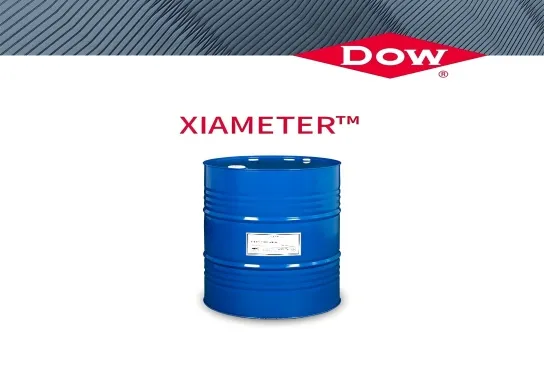
Dow XIAMETER OFX-8209A Fluid is a cost-effective amino silicone softener in the XIAMETER textile silicone series, designed for soft finishing of various textile substrates. As an amino-functional silicone polymer, it combines dual effects of efficient softening and wrinkle resistance, with convenient processing and outstanding cost performance
Efficient Softening Enhancement - Rapidly improves fabric softness, imparting delicate and skin-friendly touch
Dual Wrinkle Resistance Synergy - Enhances fabric wrinkle resistance, reduces wrinkles and improves flatness
Cost-Effective Advantage - Controllable cost, suitable for large-scale textile mass production needs
Easy Processing & Dispersion - Good fluidity, directly integrable into various textile finishing systems
Stable Performance - Chemically stable, does not affect the original color and characteristics of fabrics
Cotton Fabric Finishing - Pure cotton fabrics, cotton yarn products, improving softness, wrinkle resistance and skin-friendliness
Chemical Fiber Fabric Treatment - Polyester, nylon and other chemical fiber fabrics, improving rough hand feel
Blended Fabric Processing - Polyester-cotton, cotton-viscose blended fabrics, uniformly enhancing softening and wrinkle resistance
Knitwear Finishing - Knitted apparel, knitted home textiles, enhancing softness and elasticity retention
Home Textile Fabric Optimization - Bedding, curtains, fabrics, improving use comfort and appearance textur
| Brand | DOW |
| Product Type | Amino-Functional Silicone Polymer (Textile Softener) |
| Amine Content | 0.5~0.7% |
| Appearance | Translucent Liquid |
| Kinematic Viscosity (25℃) | 200~1200 cSt |
| Specific Gravity (25℃) | 0.98 |
| Non-Volatile Content | 98% (Typical) |
| Ionic Character | Weak Cationic (Typical) |
Q1: What is the primary function of XIAMETER OFX-8209A in industrial formulations?
A: XIAMETER OFX-8209A is a low-viscosity, reactive silicone fluid designed primarily as a surface modifier and leveling agent. It helps reduce surface tension, improve substrate wetting, and enhance flow and defect suppression in coatings, inks, adhesives, and sealants.
Q2: Is OFX-8209A compatible with common polymer systems such as acrylics, polyurethanes, and epoxies?
A: Yes, OFX-8209A exhibits broad compatibility with many thermoset and thermoplastic resin systems, including acrylics, polyurethanes, and epoxy-based formulations. Compatibility should be verified experimentally under specific processing and cure conditions due to variations in polarity and reactivity.
Q3: How is OFX-8209A typically incorporated into a formulation?
A: It is generally added during the let-down or post-additive stage under moderate agitation. Due to its reactive silane functionality, it can covalently bond to substrates or matrix components—especially those with hydroxyl or silanol groups—enhancing durability of surface effects.
Q4: Does OFX-8209A require heat or catalysts to achieve full functionality?
A: While ambient-cure reactivity is present, optimal crosslinking and surface performance are typically achieved under elevated temperature (e.g., during standard thermal curing cycles) and/or in the presence of moisture. Catalysts are not required but may accelerate reaction kinetics in certain systems.
Contact With Us:
E-mail: wangxingqiang@ericwchem.com
Have a Questions? Call Us:
Add:
Building A1, Jiete Industrial Park, Huangpu District, Guangzhou City, Guangdong Province, China