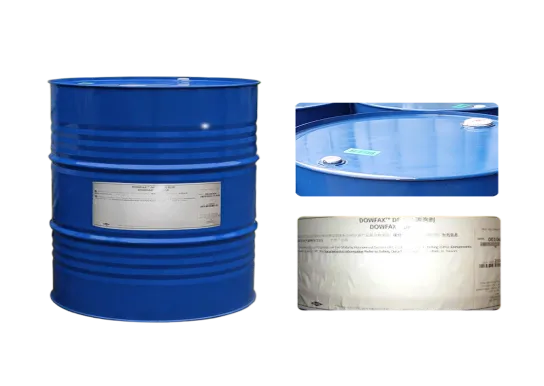
Product Information of DOWSIL SILASTIC 3-8186 Defoamer_
Low-Temp Curing: Fully cures at 75°C in 10 minutes, boosting energy efficiency effectively.
Thixotropic Flow Property: With 200,000 cps viscosity, it avoids sagging when applied on vertical surfaces.
Sealing Force Management: The low-density foam (0.225 g/cm³) reduces component deformation to a minimum.
Thermal Stability: Functions normally from -40°C to 150°C and meets automotive thermal cycling test standards.
Accurate Mixing: The 1:1 weight ratio allows it to work with automated equipment smoothly.
Areas of Application of DOWSIL SILASTIC 3-8186 Defoamer_
Automotive: Seals headlights and provides waterproofing for ECU housings (meeting IP67 standards).
Lighting: Encapsulates LED modules and enhances moisture resistance of outdoor fixtures.
Electronics: Packages sensors and enables waterproofing for consumer electronic devices.
Industrial Equipment: Makes valve gaskets and seals pipeline joints.
Specifications Of DOWSIL SILASTIC 3-8186 Defoamer_
Type | Two-component silicone foam |
Density (Part A/B) | 1.12/1.22 g/cm³ |
Viscosity (Part A/B) | 135,000/125,000 cps |
Mix Ratio | 1:1 (by weight) |
Curing Condition | 75°C/10 minutes |
Compressive Strength (25% deflection) | 0.032 MPa |
Tensile Strength | 0.18 MPa (ASTM D412) |
Elongation at Break | 140% |
Operating Temperature | -40°C to 150°C |
Packaging | 18.1 kg/pail (Part A/B separately) |
DOWSIL SILASTIC 3-8186 Defoamer_ – Frequently Asked Questions (FAQ)
Q1: What types of formulations is DOWSIL SILASTIC 3-8186 Defoamer_ typically used in?
A: This silicone-based defoamer is commonly incorporated into water-based industrial coatings, adhesives, sealants, and construction mortars where persistent foam interferes with processing, application, or final film appearance.
Q2: How should DOWSIL SILASTIC 3-8186 Defoamer_ be added to a formulation?
A: It is generally recommended to add the defoamer during the low-shear mixing stage—either pre-diluted in a compatible carrier or directly under controlled agitation—to ensure uniform dispersion without re-introducing air or destabilizing the system.
Q3: Is DOWSIL SILASTIC 3-8186 Defoamer_ compatible with common surfactants and rheology modifiers?
A: Yes, it demonstrates broad compatibility with nonionic and anionic surfactants, as well as many associative and cellulosic thickeners; however, compatibility testing in the final formulation is advised due to potential interactions with highly ionic or cationic systems.
Q4: Does this defoamer affect the long-term stability or clarity of clear coatings?
A: When properly dispersed and dosed, DOWSIL SILASTIC 3-8186 Defoamer_ typically does not cause haze or phase separation in clear systems; however, overuse or inadequate incorporation may lead to surface defects or microdroplet formation.
Q5: What is the typical dosage range for effective defoaming performance?
A: Effective dosage generally ranges from 0.1% to 2% by weight of the total formulation, depending on foam severity, shear conditions, and matrix composition—optimization through small-scale trials is strongly recommended.
 English
 Español
 tiếng việt
 русский