Features Of Clariant Dispersogen 3169 Dispersants
Multi-Point Attachment - Strong pigment surface bonding through multiple interaction mechanisms
Media Versatility - Consistent performance in water, organic solvents and hybrid systems
High-Pigment Loading - Maintains stability in concentrated color formulations
Process Efficiency - Accelerates dispersion kinetics during production
Regulatory Compliance - Meets global environmental and safety standards
Typical Applications Of Clariant Dispersogen 3169 Dispersants
Automotive Refinish Coatings - Basecoat formulations requiring color accuracy
Flexible Packaging Inks - Polyolefin and polyester film printing
Engineering Resin Coloring - High-temperature plastic applications
Technical Textile Dyeing - Performance fabric coloration
Specialty Paper Coatings - Decorative and functional paper products
Specifications Of Clariant Dispersogen 3169 Dispersants
Chemical Type | Nonionic Dispersant |
Appearance | Transparent to Light Yellow Liquid |
Active Ingredient | Polymeric Compound |
Solid Content | Approx. 50% |
Solvent | Water |
pH Value | 6-8 (1% in water) |
Density | 1.05-1.15 g/cm³ |
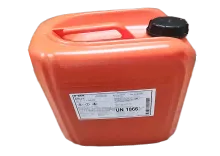
Packaging | 25kg/drum, 200kg/drum |
Origin | Germany |
Clariant Dispersogen 3169 Dispersants – Frequently Asked Questions (FAQ)
Q1: What types of pigments is Dispersogen 3169 especially effective for?
A: Dispersogen 3169 is particularly well-suited for stabilizing inorganic pigments such as iron oxides and titanium dioxide, as well as many organic pigments commonly used in architectural coatings, industrial finishes, and printing inks. Its molecular architecture supports strong anchoring and steric stabilization in aqueous and solvent-borne systems.
Q2: Can Dispersogen 3169 be used in both water-based and solvent-based formulations?
A: Yes — Dispersogen 3169 is formulated to deliver reliable pigment dispersion performance across a broad range of media, including water-based emulsions, acrylic dispersions, and medium-polarity organic solvents. Compatibility should always be verified under actual formulation conditions due to system-specific interactions.
Q3: How does Dispersogen 3169 contribute to long-term storage stability?
A: It helps prevent pigment agglomeration and sedimentation during storage by providing robust steric hindrance and interfacial coverage. This contributes to consistent viscosity, color strength, and gloss retention over time — especially important in low-shear storage conditions typical of ready-to-use coatings and inks.
Q4: Is Dispersogen 3169 compatible with common thickeners and rheology modifiers?
A: Dispersogen 3169 generally shows good compatibility with associative and non-associative thickeners, including hydrophobically modified ethoxylated urethanes (HEUR), hydroxyethyl cellulose (HEC), and acrylic rheology modifiers. However, optimal thickener selection and addition sequence should be evaluated case-by-case to avoid destabilization or viscosity loss.
 English
 Español
 tiếng việt
 русский