English
 Español
 tiếng việt
 русский
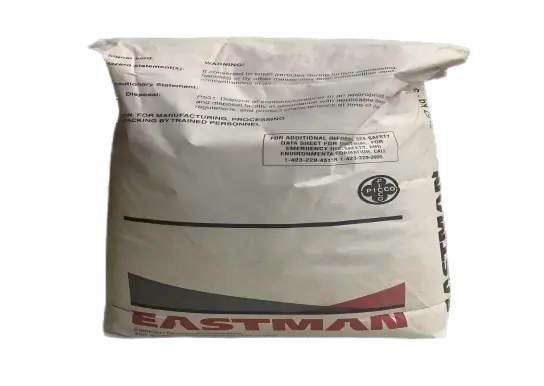
The Eastman Piccotac Olefin Resin range offers a broad range of aliphatic and aromatic modified hydrocarbon resins designed for high performance adhesives and coatings. These light-colored, low-odor resins feature controlled molecular weight distributions that balance tack, cohesion and thermal stability while meeting stringent environmental standards.
They have broad compatibility with styrenic block copolymers (SIS, SBS, SIBS), natural rubber and EVA elastomers, ensuring optimal bonding in hot melt adhesive (HMA) and pressure sensitive adhesive (PSA) formulations.
Complies with international environmental standards including food contact regulations.
By adjusting the softening point and the degree of aromatic modification, these resins provide improved melt viscosity control and enhanced bond strength on a variety of substrates from flexible films to rigid composites.
Enhanced Compatibility: Seamlessly integrates with block copolymers (SIS/SBS/SEBS) and diverse polymer systems for flexible formulation Optimized Processing: Low molecular weight and narrow molecular weight distribution (MWD) ensure superior flow properties and low-temperature performance
Durability & Stability: Antioxidant stabilization extends shelf life, reduces thermal degradation, and minimizes yellowing for light-colored applications
Eco-Safe Formulation: Low VOC, compliant with food-contact and medical standards, ideal for hygiene-sensitive products
Balanced Adhesion: Enhances both initial tack and long-term cohesion for pressure-sensitive and hot-melt adhesives
Pressure-Sensitive Adhesives (PSAs): Labels, medical tapes, and industrial tapes requiring high peel strength and aging resistance
Hot-Melt Adhesives (HMAs): Carton sealing, footwear bonding, and hygiene product assembly (e.g., diapers) with fast curing and low odor
Rubber & Elastomer Modification: Tire compounding, sealants, and automotive components for improved tack and weather resistance
Industrial & Electronics: Wire harness mounting, waterproof coatings, and electronics assembly adhesives
| Model | Type | Compatibility |
| Piccotac 9095 | Aromatic-modified C5 hydrocarbon resin | SIS/SBS/EVA/natural rubber, etc. |
| Piccotac 8595 | Aromatic-modified aliphatic hydrocarbon resin | SIS/SBS/SIBS/EVA/APO polymers |
| Piccotac 8095 | Aromatic-modified C5 hydrocarbon resin | EVA/SIS/polyolefins, etc. |
| Piccotac 7590 | Aromatic-modified aliphatic hydrocarbon resin | SIS/SBS/SIBS block copolymers |
| Piccotac 7050 | Aromatic-modified C5 hydrocarbon resin | SBS/SIS/natural rubber, etc. |
| Piccotac 1100 | Aliphatic C5 hydrocarbon resin | SIS/SBS/EVA/natural rubber, etc. |
| Piccotac 1115 | Aliphatic C5 hydrocarbon resin | SIS/SBS/EVA/natural rubber, etc. |
| Piccotac 1098 | Aliphatic C5 hydrocarbon resin | SIS/natural rubber/APO elastomers |
| Piccotac 1020 | Aliphatic liquid resin | SIS/SBS/polyolefins/waxes |
| Piccotac 1095-N | Aliphatic C5 hydrocarbon resin | SIS/natural rubber/APO elastomers, etc. |
Q1: What is the primary function of Eastman Olefin Resin Piccotac in adhesive and coating formulations?
A: Piccotac functions primarily as a tackifier, enhancing initial adhesion (tack), peel strength, and shear resistance in hot-melt, solvent-based, and water-based adhesive systems. It improves compatibility with polyolefin-based polymers and contributes to balanced performance across temperature ranges.
Q2: Is Piccotac suitable for use in food-contact adhesives?
A: Yes—Piccotac resins are designed for use in adhesive systems intended for indirect food contact applications, subject to compliance with applicable regional regulatory frameworks and final formulation evaluation. End-use compliance depends on full system assessment, including substrate, processing conditions, and migration behavior.
Q3: How does Piccotac compare to rosin ester or terpene-based tackifiers in polyolefin-rich systems?
A: Piccotac offers superior compatibility and thermal stability in polyolefin-dominated formulations compared to many rosin or terpene derivatives. Its non-polar, saturated hydrocarbon structure minimizes discoloration and oxidative degradation, supporting longer pot life and improved high-temperature performance.
Q4: What solvents are commonly used to dissolve Piccotac for solvent-borne adhesive applications?
A: Piccotac dissolves readily in aliphatic and aromatic hydrocarbons (e.g., toluene, xylene, VM&P naphtha) and chlorinated solvents. It has limited solubility in polar solvents such as alcohols or ketones, so solvent selection should align with resin polarity and overall formulation polarity requirements.
Contact With Us:
E-mail: wangxingqiang@ericwchem.com
Have a Questions? Call Us:
Add:
Building A1, Jiete Industrial Park, Huangpu District, Guangzhou City, Guangdong Province, China