English
 Español
 tiếng việt
 русский
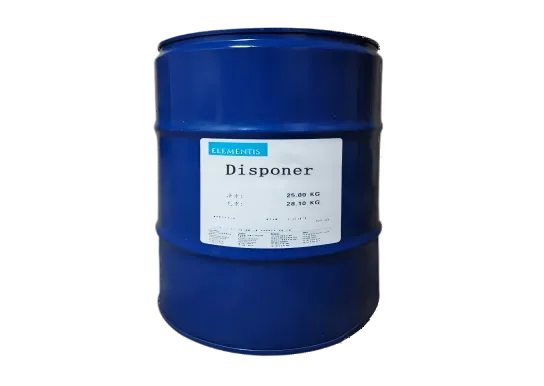
Elementis Deqian NUOSPERSE FX 9200UV is a high-efficiency wetting dispersant specially designed for solvent-based and solvent-free (UV) ink systems under Elementis Deqian, with high-branched copolymers containing multiple functional groups as the core component. It is solvent-free with 100% active ingredients, and relying on its unique steric hindrance structure
Solvent-free and high activity - 100% active ingredients, no solvent added, environmentally friendly and improve formula utilization
Excellent dispersion and anti-flocculation - Steric hindrance structure, efficiently disperses pigments and eliminates flocculation and caking
Improved processing efficiency - Shortens grinding time, reduces grinding system viscosity and simplifies production process
Optimized finished product performance - Enhances color development and hiding power, improves ink gloss and film flatness
Wide pigment adaptability - Has excellent wetting and dispersing effects on most organic pigments and carbon black
Solvent-based inks - Suitable for most solvent-based ink systems such as I-IV oil systems, optimizing dispersion and construction performance
Solvent-free UV inks - Special for UV ink systems, ensuring dispersion stability and performance after curing
Plastic inks - Special inks for plastic substrates, improving adhesion and color fullness
Printing inks - Various high-end printing inks, optimizing color development and hiding power, and improving printing quality
Industrial inks - Industrial special inks, suitable for organic pigment/carbon black systems, ensuring storage stability
| Model | NUOSPERSE FX 9200UV |
| Brand | Elementis Deqian |
| Chemical Type | High-branched copolymer type wetting dispersant |
| Chemical Composition | High-branched copolymers with multiple functional groups |
| Appearance (20°C) | Yellow to yellowish-brown, granular to powder |
| Active Ingredient | Approx. 100% |
| Specific Gravity (20°C) | 1.13 |
| Ionicity | Non-ionic |
| pH Value (20°C) | 6.0-8.0 (1% aqueous solution) |
| Viscosity (20°C) | ≤200 mPa·s |
Q1: What types of pigments and fillers is NUOSPERSE FX 9200UV especially effective for?
A: NUOSPERSE FX 9200UV is specifically engineered for high-performance dispersion of organic pigments, carbon black, and inorganic oxides (e.g., titanium dioxide, iron oxides) in UV-curable systems. Its molecular structure provides strong anchoring and steric stabilization in low-viscosity, reactive monomer-rich environments.
Q2: Can NUOSPERSE FX 9200UV be used in both free-radical and cationic UV formulations?
A: Yes — it demonstrates compatibility with common free-radical acrylate-based systems and shows good stability in epoxide- and vinyl ether–based cationic UV formulations, though optimal performance should be verified during formulation development due to system-specific reactivity and polarity.
Q3: How does NUOSPERSE FX 9200UV contribute to final film properties after UV curing?
A: It supports excellent pigment deagglomeration and stabilization without interfering with photoinitiator efficiency or crosslink density. This helps maintain high gloss, color strength, transparency, and resistance to settling or flocculation in the cured film.
Q4: Is NUOSPERSE FX 9200UV compatible with common UV monomers and oligomers?
A: It exhibits broad compatibility with standard acrylate monomers (e.g., TMPTA, HDDA) and oligomers (e.g., urethane acrylates, epoxy acrylates), as well as many functionalized reactive diluents. Compatibility testing under shear and storage conditions is recommended for each specific formulation.
Q5: What is the typical dosage range for NUOSPERSE FX 9200UV in UV ink or coating formulations?
A: Dosage depends on pigment type, loading level, and desired performance, but it is typically used at low concentrations — generally ranging from 0.1% to 2% by weight relative to pigment solids — with optimization best determined through lab-scale dispersion trials.
Contact With Us:
E-mail: wangxingqiang@ericwchem.com
Have a Questions? Call Us:
Add:
Building A1, Jiete Industrial Park, Huangpu District, Guangzhou City, Guangdong Province, China