English
 Español
 tiếng việt
 русский
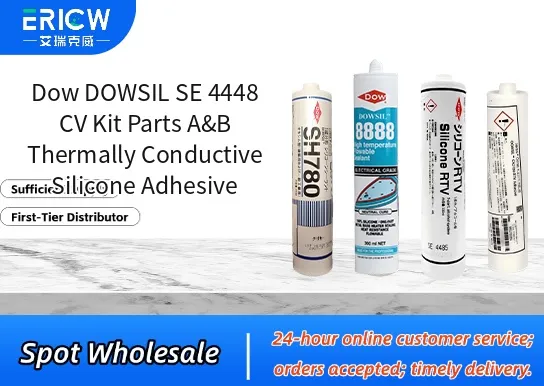
Two-part, addition-cure silicone system with excellent thermal conductivity for reliable heat dissipation.
Low modulus and high flexibility after cure, minimizing stress on sensitive electronic components.
Room-temperature or elevated-temperature curing options provide processing flexibility in manufacturing environments.
Excellent adhesion to a wide range of substrates including metals, ceramics, and engineered plastics without primers.
UL 94 V-0 rated for flame retardancy, supporting safety compliance in demanding electronics applications.
Thermal interface bonding of power modules and IGBTs in electric vehicle inverters.
Attachment and heat transfer between LED packages and metal-core printed circuit boards (MCPCBs).
Die-attach and thermal management of high-power semiconductor devices in industrial power supplies.
Structural bonding and thermal path creation for battery module cold plates and cell-to-pack assemblies.
| Chemical Type | Platinum-catalyzed addition-cure silicone |
| Product Form | Two-component kit (Part A and Part B) |
| Appearance (Uncured) | Part A: Gray paste; Part B: Colorless to pale yellow liquid |
| Primary Applications | Thermal interface material (TIM), structural thermal bonding |
| Key Features | Thermally conductive, flexible, low-stress, flame-retardant |
| Benefits | Reduces thermal resistance, accommodates CTE mismatch, enhances long-term reliability |
| Curing Mechanism | Heat-assisted or room-temperature addition cure (accelerated by elevated temperature) |
| Storage Stability | 12 months at ≤25 °C in unopened containers |
Contact With Us:
E-mail: wangxingqiang@ericwchem.com
Have a Questions? Call Us:
Add:
Building A1, Jiete Industrial Park, Huangpu District, Guangzhou City, Guangdong Province, China